
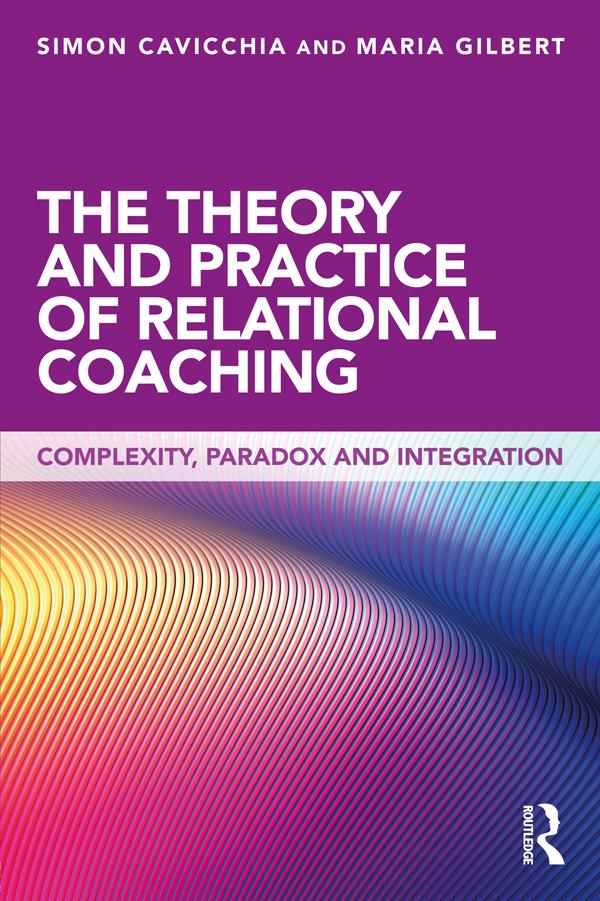
The 'relational turn' is a movement affecting a range of disciplines including neuroscience, psychoanalysis, psychotherapy, organisational consulting and, more recently, coaching. Its primary focus is on the centrality of human relating in determining how individuals develop, make meaning and function individually and collectively.
In The Theory and Practice of Relational Coaching: Complexity, Paradox and Integration, Simon Cavicchia and Maria Gilbert expand existing coaching theory and practice to focus on the implications of the relational turn for how coaches and clients think about the nature of identity, the self, change, learning, and individual and organisational development. Drawing on perspectives as varied as relational neuroscience, the relational foundations of personality development, psychoanalysis, psychotherapy, shame, vulnerability, complexity and systems ideas, the authors shed light on many of the paradoxes and challenges facing coaches and their clients in today’s fast-paced, volatile and uncertain organisational environments. These include holding tensions such as the uniqueness of individual needs with the requirements of organisational contexts, managing multiple stakeholder expectations and networks and balancing linear approaches to change with adjusting to emerging and unpredictable events.
Given the ever-increasing volatility, complexity and uncertainty that coaches and their clients face, The Theory and Practice of Relational Coaching guides the reader through a series of illuminating perspectives, examples and practical suggestions. These will enable coaches to integrate a more relational orientation in their work and extend their range and that of their clients for responding creatively to the challenges of modern organisational life. The book will appeal to coaches and coaching psychologists in practice and training, as well as counsellors and psychotherapists retraining as coaches.
Pay easily by card, Klarna, Apple Pay or Google Pay. Not happy? You always have a 14-day money-back guarantee. Read more in our terms. If you have any questions, email us at hello@memmo.org.
Memmo makes studying easier – wherever you are in the world. We bring your course books and smart study tools together in one place: summaries, quizzes, podcasts and flashcards. Plus Ted, your study buddy who answers anything you wonder. Over 50,000 students already study here – built to help you learn faster and stress less.