
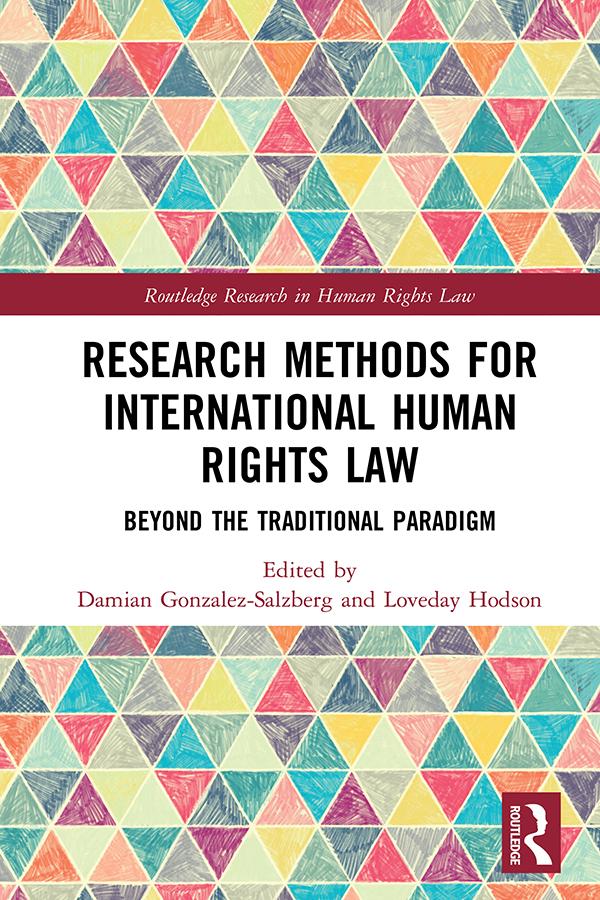
The study and teaching of international human rights law is dominated by the doctrinal method. A wealth of alternative approaches exists, but they tend to be discussed in isolation from one another. This collection focuses on cross-theoretical discussion that brings together an array of different analytical methods and theoretical lenses that can be used for conducting research within the field. As such, it provides a coherent, accessible and diverse account of key theories and methods. A distinctive feature of this collection is that it adopts a grounded approach to international human rights law, through demonstrating the application of specific research methods to individual case studies. By applying the approach under discussion to a concrete case it is possible to better appreciate the multiple understandings of international human rights law that are missed when the field is only comprehended though the doctrinal method. Furthermore, since every contribution follows the same uniform structure, this allows for fruitful comparison between different approaches to the study of our discipline.
Pay easily by card, Klarna, Apple Pay or Google Pay. Not happy? You always have a 14-day money-back guarantee. Read more in our terms. If you have any questions, email us at hello@memmo.org.
Memmo makes studying easier – wherever you are in the world. We bring your course books and smart study tools together in one place: summaries, quizzes, podcasts and flashcards. Plus Ted, your study buddy who answers anything you wonder. Over 50,000 students already study here – built to help you learn faster and stress less.