
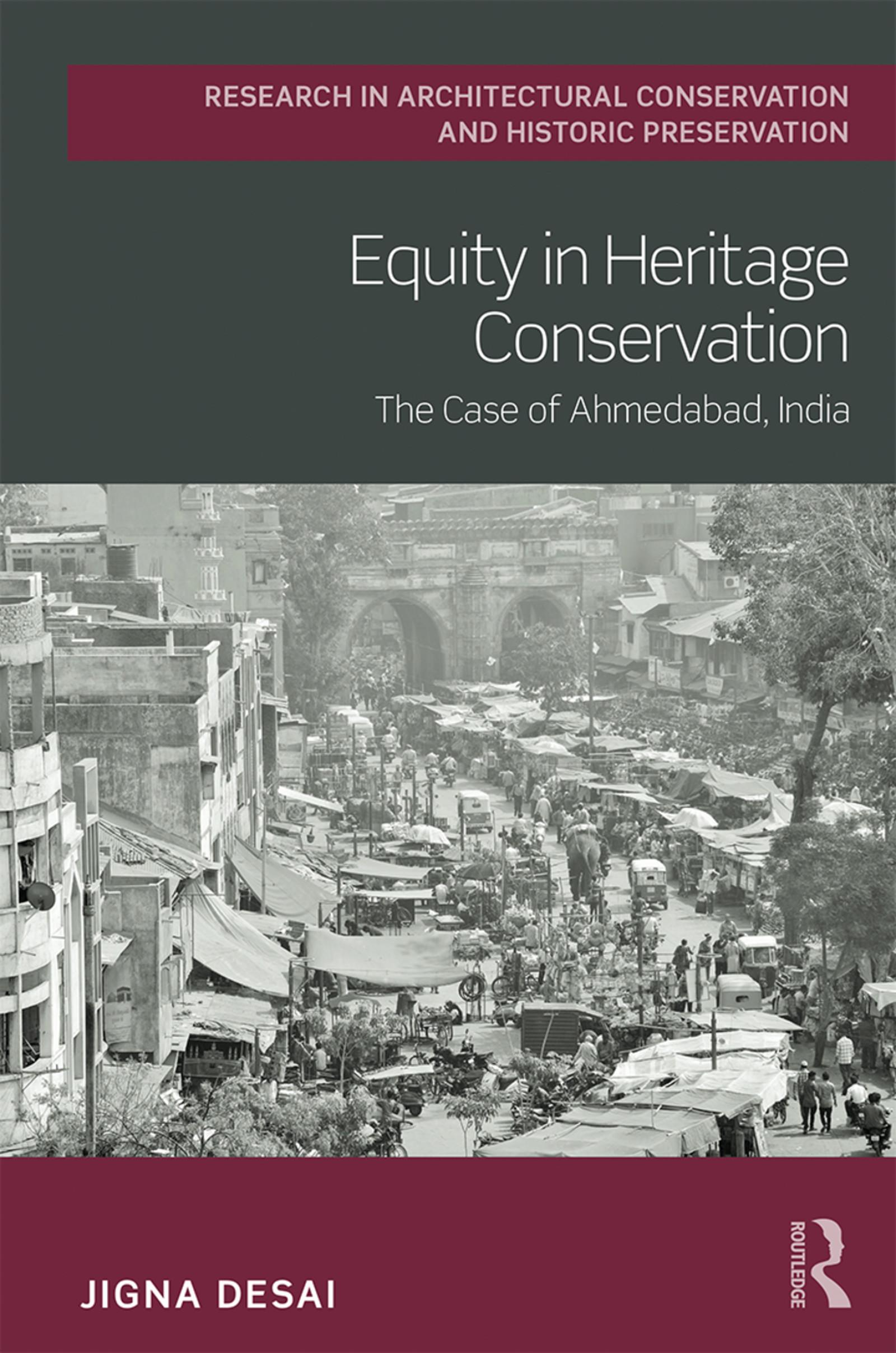
Recognised by the UN’s Sustainable Development Goals as a measure to make cities inclusive, safe and resilient, conservation of natural and cultural heritage has become an increasingly important issue across the globe. The equity principle of sustainable development necessitates that citizens hold the right to participate in the cultural economy of a place, requiring that inhabitants and other stakeholders are consulted on processes of continuity or transformation. However, aspirations of cultural exchange do not translate in practice.
Equity in Heritage Conservation takes the UNESCO World Heritage City of Ahmedabad, India, as the foundational investigation into the realities of cultural heritage conservation and management. It contextualises the question of heritage by citing places, projects and initiatives from other cities around the world to identify issues, processes and improvements. Through illustrated chapters it discusses the understanding of heritage in relation to the sustainable development of living historic cities, the viability of specific measures, ethics of engagement and recommendations for governance.
This book will appeal to a range of scholars interested in cultural heritage conservation and management, sustainable development, urban and regional planning, and architecture.
Pay easily by card, Klarna, Apple Pay or Google Pay. Not happy? You always have a 14-day money-back guarantee. Read more in our terms. If you have any questions, email us at hello@memmo.org.
Memmo makes studying easier – wherever you are in the world. We bring your course books and smart study tools together in one place: summaries, quizzes, podcasts and flashcards. Plus Ted, your study buddy who answers anything you wonder. Over 75,000 students already study here – built to help you learn faster and stress less.