
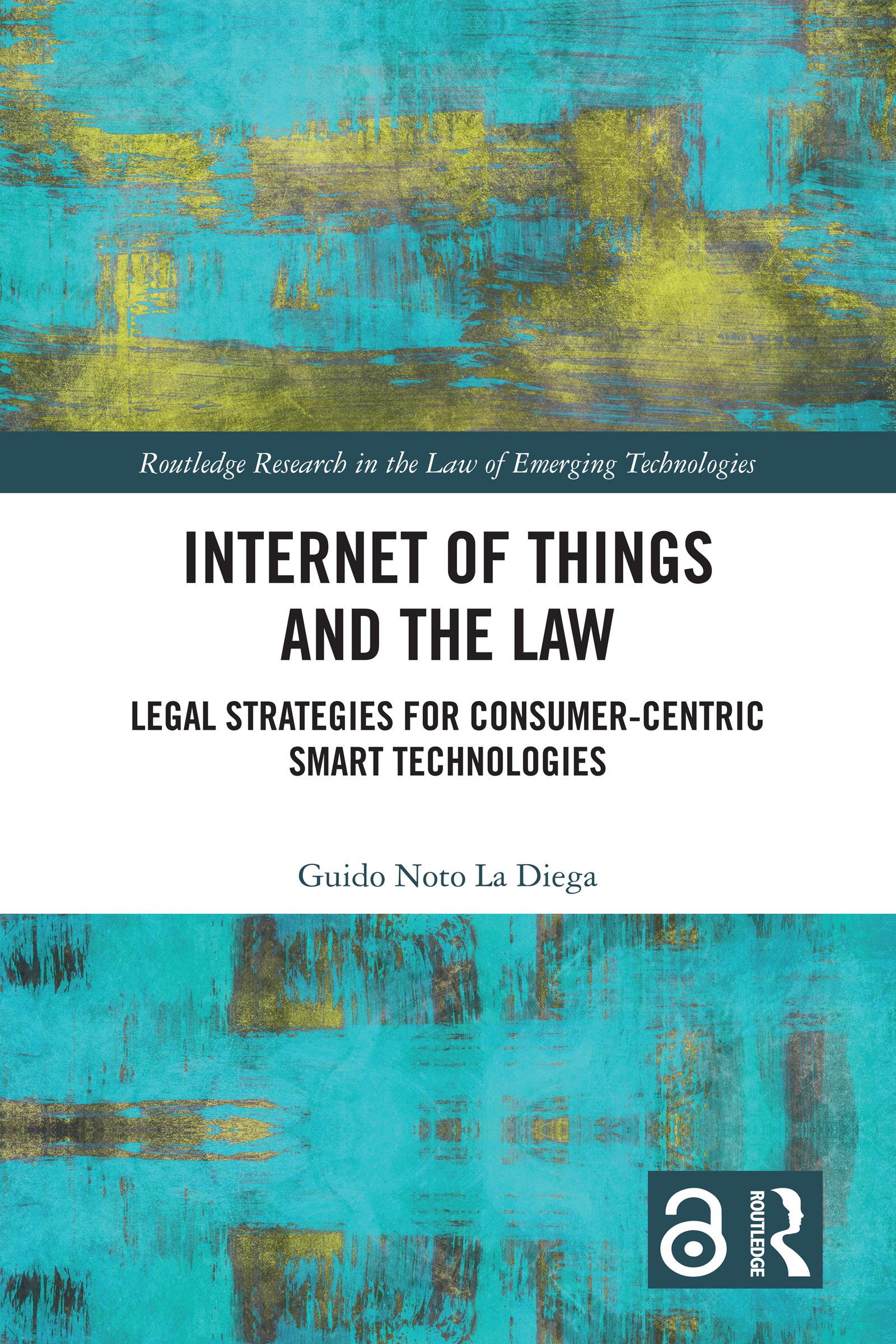
Internet of Things and the Law: Legal Strategies for Consumer-Centric Smart Technologies is the most comprehensive and up-to-date analysis of the legal issues in the Internet of Things (IoT). For decades, the decreasing importance of tangible wealth and power – and the increasing significance of their disembodied counterparts – has been the subject of much legal research. For some time now, legal scholars have grappled with how laws drafted for tangible property and predigital ‘offline’ technologies can cope with dematerialisation, digitalisation, and the internet. As dematerialisation continues, this book aims to illuminate the opposite movement: rematerialisation, namely, the return of data, knowledge, and power within a physical ‘smart’ world. This development frames the book’s central question: can the law steer rematerialisation in a human-centric and socially just direction? To answer it, the book focuses on the IoT, the sociotechnological phenomenon that is primarily responsible for this shift. After a thorough analysis of how existing laws can be interpreted to empower IoT end users, Noto La Diega leaves us with the fundamental question of what happens when the law fails us and concludes with a call for collective resistance against ‘smart’ capitalism.
The Open Access version of this book, available at http://www.taylorfrancis.com, has been made available under a Creative Commons Attribution (CC-BY) 4.0 license.
Pay easily by card, Klarna, Apple Pay or Google Pay. Not happy? You always have a 14-day money-back guarantee. Read more in our terms. If you have any questions, email us at hello@memmo.org.
Memmo makes studying easier – wherever you are in the world. We bring your course books and smart study tools together in one place: summaries, quizzes, podcasts and flashcards. Plus Ted, your study buddy who answers anything you wonder. Over 50,000 students already study here – built to help you learn faster and stress less.