
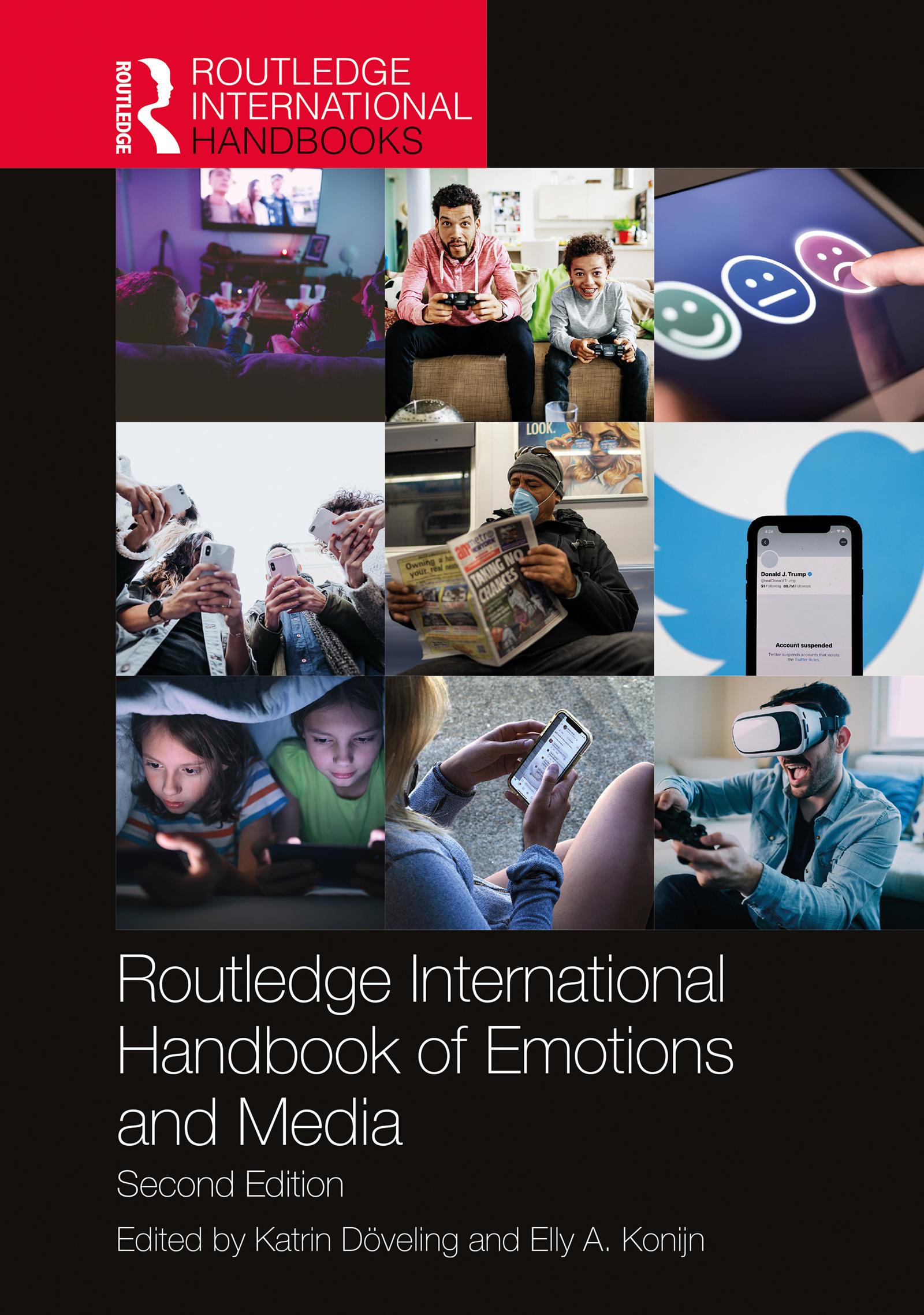
In times of a worldwide pandemic, the election of a new US president, "MeToo," and "Fridays for Future," to name but a few examples, one thing becomes palpable: the emotional impact of media on individuals and society cannot be underestimated. The relations between media, people, and society are to a great extent based on human emotions. Emotions are essential in understanding how media messages are processed and how media affect individual and social behavior as well as public social life.
Adopting a thoroughly interdisciplinary approach to the study of emotions in the context of media, the second, entirely revised and updated, edition of Routledge International Handbook of Emotions and Media comprises areas such as evolutionary psychology, media psychology, media sociology, cultural studies, media entertainment, and political and digital communication. Leading experts from across the globe explore cutting-edge research on the role of emotion in selecting and processing media contents, the emotional consequences of media use, politics and public emotion, emotions in political communication and persuasion, as well as emotions in digital, interactive, and virtual encounters.
This compelling and authoritative Handbook is an essential reference tool for scholars and students of media, communication science, media psychology, emotion, cognitive and social psychology, cultural studies, media sociology, and related fields.
Pay easily by card, Klarna, Apple Pay or Google Pay. Not happy? You always have a 14-day money-back guarantee. Read more in our terms. If you have any questions, email us at hello@memmo.org.
Memmo makes studying easier – wherever you are in the world. We bring your course books and smart study tools together in one place: summaries, quizzes, podcasts and flashcards. Plus Ted, your study buddy who answers anything you wonder. Over 50,000 students already study here – built to help you learn faster and stress less.