
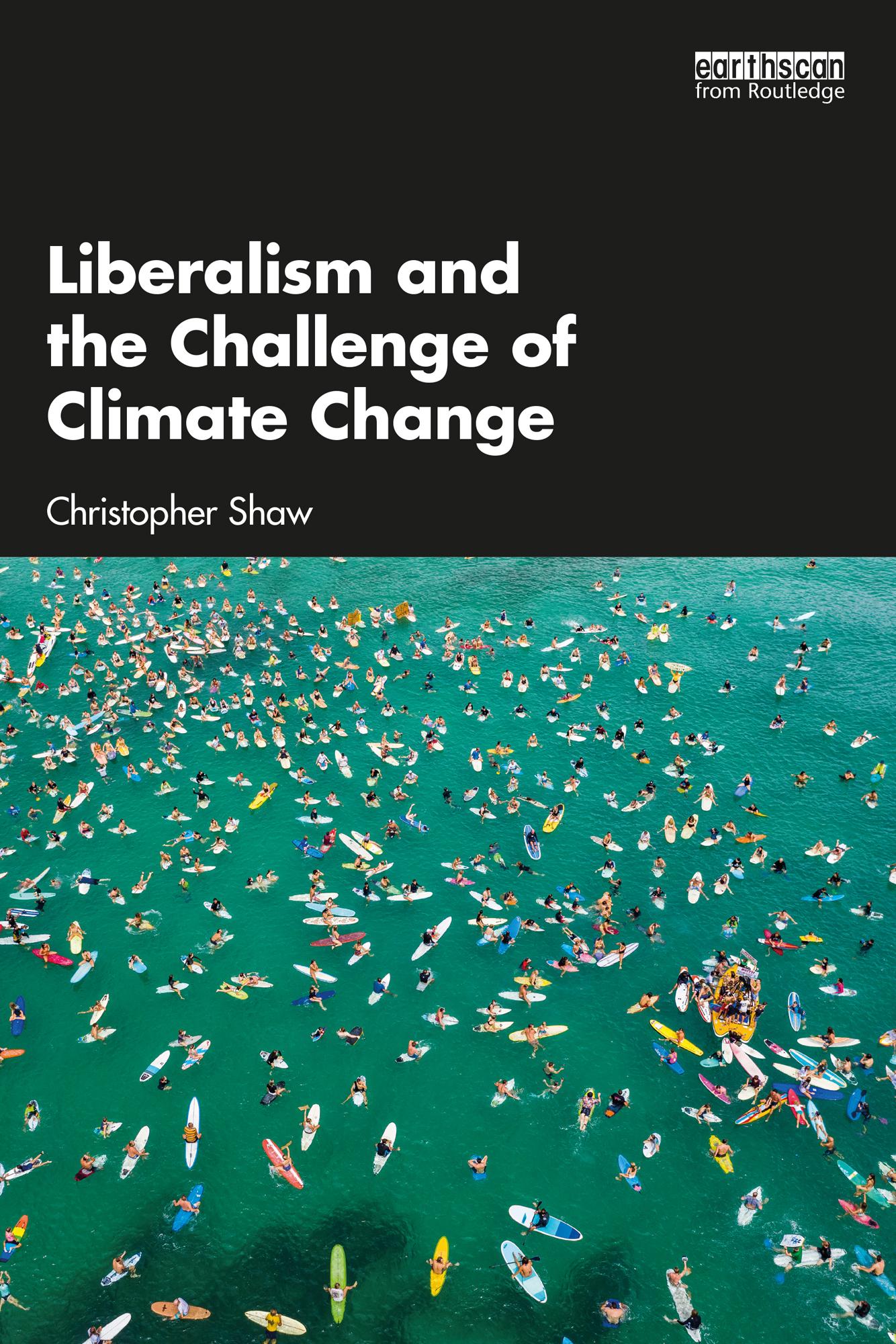
In this book Christopher Shaw analyses how liberalism has shaped our understanding of climate change and how liberalism is legitimated in the face of a crisis for which liberalism has no answers.
The language and symbolism we use to make sense of climate change arose in the post-World War II liberal institutions of the West. This language and symbolism, in neutralising the philosophical and ideological challenge climate change poses to the legitimacy of free market liberalism, has also closed off the possibility of imagining a different kind of future for humanity. The book is structured around a repurposing of the ‘guardrail’ concept, commonly used in climate science narratives to communicate the boundary between safe and dangerous climate change. Five discursive ‘guardrails’ are identified, which define a boundary between safe and dangerous ideas about how to respond to climate change. The theoretical treatment of these issues is complemented with data from interviews with opinion-formers, decision-makers and campaigners, exploring what models of human nature and political possibilities guide their approach to the politics of climate change governance.
This book will be of great interest to students and scholars of climate change, liberal politics, environmental communication and environmental politics and philosophy, in general.
Pay easily by card, Klarna, Apple Pay or Google Pay. Not happy? You always have a 14-day money-back guarantee. Read more in our terms. If you have any questions, email us at hello@memmo.org.
Memmo makes studying easier – wherever you are in the world. We bring your course books and smart study tools together in one place: summaries, quizzes, podcasts and flashcards. Plus Ted, your study buddy who answers anything you wonder. Over 50,000 students already study here – built to help you learn faster and stress less.