
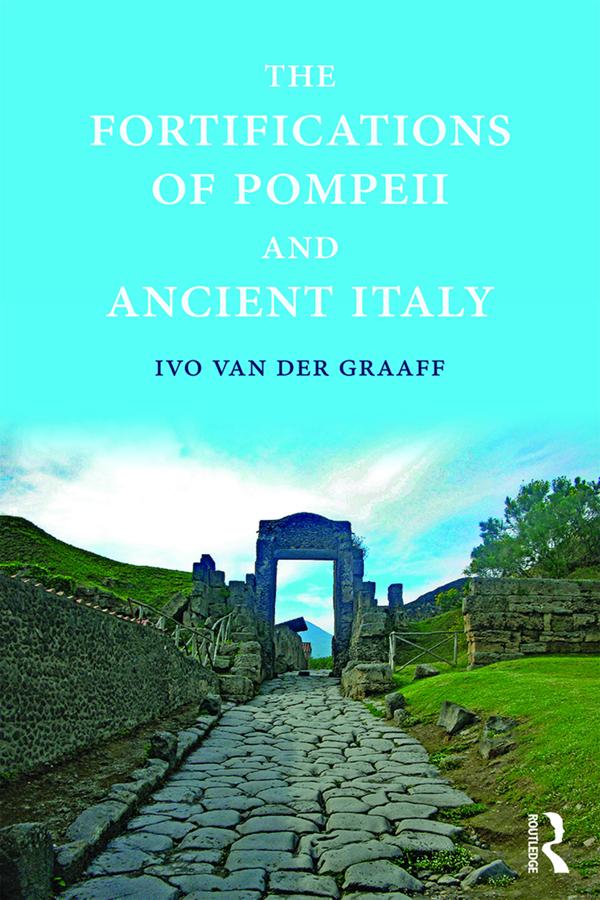
The fortifications of Pompeii stand as the ancient city’s largest, oldest, and best preserved public monument. Over its 700-year history, Pompeii invested significant amounts of money, resources, and labor into (re)building, maintaining, and upgrading the walls. Each intervention on the fortifications marked a pivotal event of social and political change, signaling dramatic shifts in Pompeii’s urban, social, and architectural framework. Although the defenses had a clear military role, their design, construction materials, and aesthetics reflect the political, social, and urban development of the city. Their fate was intertwined with that of Pompeii.
This study redefines Pompeii’s fortifications as a central monument that physically and symbolically shaped the city. It considers the internal and external forces that morphed their appearance and traces how the fortifications served to foster a sense of community. The city wall emerges as a dynamic, ideologically freighted monument that was fundamental to the image and identity of Pompeii. The book is a unique narrative of the social and urban development of the city from foundation to the eruption of Vesuvius, through the lens of the public building most critical to its independence and survival.
Pay easily by card, Klarna, Apple Pay or Google Pay. Not happy? You always have a 14-day money-back guarantee. Read more in our terms. If you have any questions, email us at hello@memmo.org.
Memmo makes studying easier – wherever you are in the world. We bring your course books and smart study tools together in one place: summaries, quizzes, podcasts and flashcards. Plus Ted, your study buddy who answers anything you wonder. Over 75,000 students already study here – built to help you learn faster and stress less.