
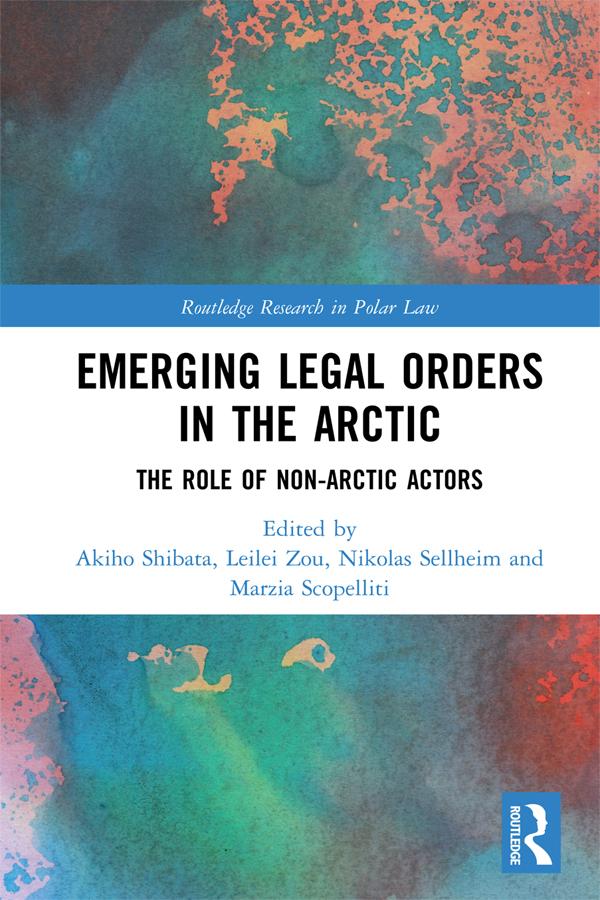
More than ever before the changing environmental and political landscape in the Arctic requires stability and foreseeability based on resilient common norms. The emerging legal orders in the Arctic cannot be legitimately created or effectively implemented unless all relevant actors are involved. Simultaneously, it must always be based on respect for the sovereign rights of the eight Arctic states in the region, as well as the tradition and cultural livelihood of the local communities. It is this delicate balance between Arctic and non-Arctic interests that is the core problématique for the emerging legal orders in the Arctic.
Emerging Legal Orders in the Arctic critically examines the role of non-Arctic actors in this advancement of the shape and scope of the Arctic legal order. Discussing the admittance and participation of Observer states and organisations in the Arctic Council, including task force meetings where new treaties are negotiated, it details the issues and successes this can result in. Setting up the context of the current legal orders in the Arctic, the book discusses Asian, indigenous and European perspectives, amongst others. There is a strong focus on the groundbreaking fisheries agreement of November 2017 in the Central Arctic Ocean (CAO), and the impact on both Arctic and non-Arctic actors. Interests in marine living resources, scientific cooperation and the Arctic shipping regimes and governance are also thoroughly discussed from multiple perspectives.
The book combines the expertise of academics and practitioners in the fields of international law and Arctic governance, uniquely focusing on Asian actors in the Arctic legal order-making. The resulting study is a fascinating insight into the interplay between non-Arctic actors and the Arctic legal order, and will be invaluable to academics in the field of Arctic and international law.
Pay easily by card, Klarna, Apple Pay or Google Pay. Not happy? You always have a 14-day money-back guarantee. Read more in our terms. If you have any questions, email us at hello@memmo.org.
Memmo makes studying easier – wherever you are in the world. We bring your course books and smart study tools together in one place: summaries, quizzes, podcasts and flashcards. Plus Ted, your study buddy who answers anything you wonder. Over 50,000 students already study here – built to help you learn faster and stress less.