
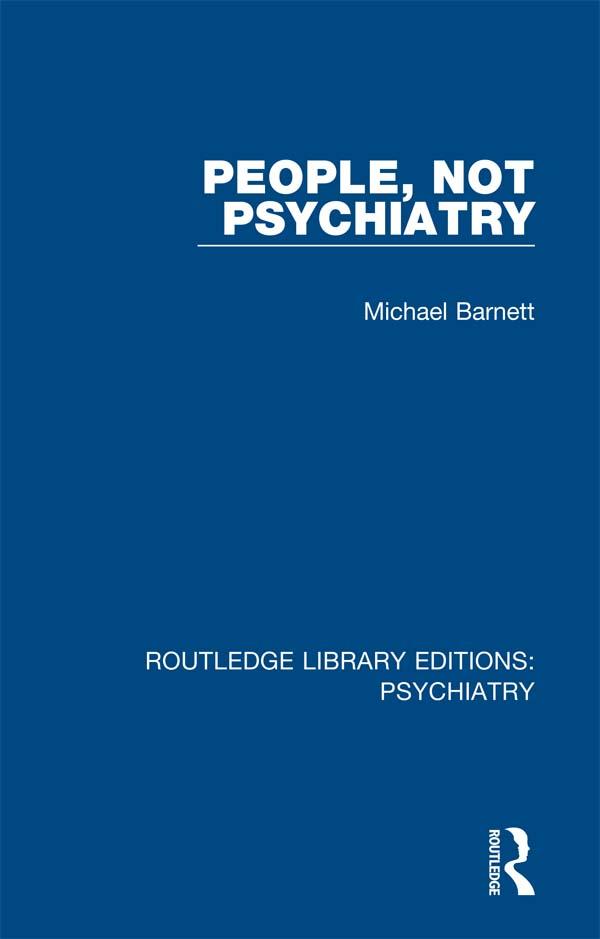
Originally published in 1973, this book is about people and psychiatry. About people who rejected psychiatry as it was generally practised at the time, people who sought for and found alternative ways of caring for and healing one another.
The author, who had been active in radical alternatives to psychiatry for some time, offers us a programme based not on drugs, repression and a ‘questionable’ expertise, but on human caring, greater awareness of the body, deeper communication between persons and a willingness to let the emotions flow. It is a challenging alternative which came at a time when the viability of scientific, theoretical and chemical approaches to distress were being questioned at all levels of society. This alternative includes the new direct methods of healing (making whole) such as Encounter, Gestalt, Bioenergetics, Psychofantasy – methods that do not do things to people but allow them to feel their way into change through experiment, flow and choice.
The main focus of the book is People, not Psychiatry (PNP), the network set up by the author in 1969. PNP is open to all, and people in it help one another in times of stress and crisis, if they are asked to and when they are needed. One of the main assets of these networks is that they are an alternative and they are there.
The book tells the story of PNP’s birth and growth. It is a personal story, a moving story, a story about people. In addition, the book contains some lively theoretical discussion, both simple and clear, in the course of which the author tentatively offers his own theory of neurosis – that many people become victims of the primitive logic patterns laid down in infancy, patterns that become reinforced through fear and habit and have to be dissolved or replaced if we are to enjoy a full, healthy, free-flowing life.
The book is directed at doctors, patients, consultants, nurses, psychologists, social workers, therapists, in fact anyone involved in any way in the field of psychiatry. It is also offered to all those whom psychiatry touches, that it to say – everyone.
Pay easily by card, Klarna, Apple Pay or Google Pay. Not happy? You always have a 14-day money-back guarantee. Read more in our terms. If you have any questions, email us at hello@memmo.org.
Memmo makes studying easier – wherever you are in the world. We bring your course books and smart study tools together in one place: summaries, quizzes, podcasts and flashcards. Plus Ted, your study buddy who answers anything you wonder. Over 50,000 students already study here – built to help you learn faster and stress less.