
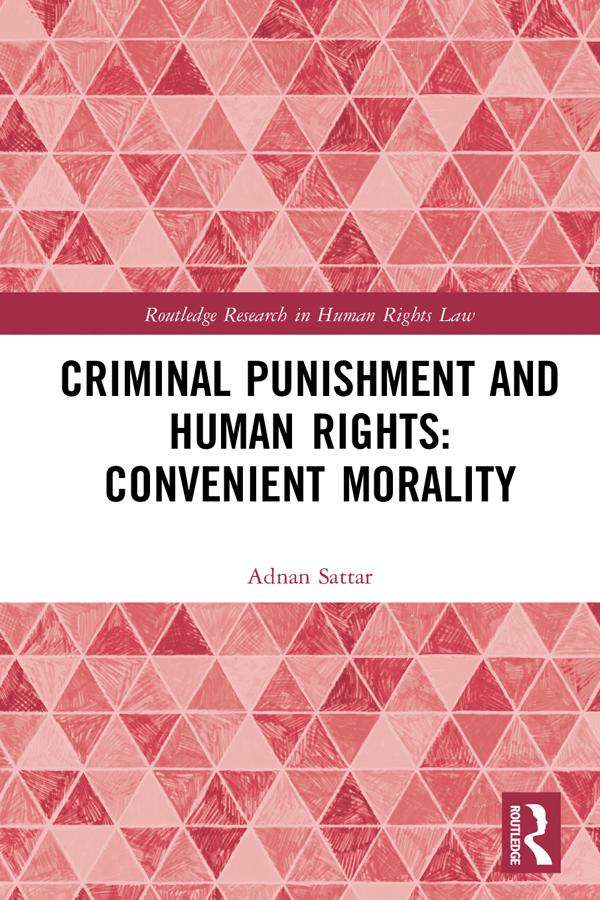
This book examines the relationship between international human rights discourse and the justifi cations for criminal punishment. Using interdisciplinary discourse analysis, it exposes certain paradoxes that underpin the ‘International Bill of Human Rights’, academic commentaries on human rights law, and the global human rights monitoring regime in relation to the aims of punishment in domestic penal systems. It argues that human rights discourse, owing to its theoretical kinship with Kantian philosophy, embodies a paradoxical commitment to human dignity on the one hand, and retributive punishment on the other. Further, it sustains the split between criminal justice and social justice, which results in a sociologically ill-informed understanding of punishment. Human rights discourse plays a paradoxical role vis-à-vis the punitive power of the state as it seeks to counter criminalisation in some areas and backs the introduction of new criminal offences – and longer prison sentences – in others. The underlying priorities, it is argued, have been shaped by a number of historical circumstances. Drawing on archival material, the study demonstrates that the international penal discourse produced during the late nineteenth and early twentieth century laid greater emphasis on offender rehabilitation and was more attentive to the social context of crime than is the case with the modern human rights discourse.
Pay easily by card, Klarna, Apple Pay or Google Pay. Not happy? You always have a 14-day money-back guarantee. Read more in our terms. If you have any questions, email us at hello@memmo.org.
Memmo makes studying easier – wherever you are in the world. We bring your course books and smart study tools together in one place: summaries, quizzes, podcasts and flashcards. Plus Ted, your study buddy who answers anything you wonder. Over 50,000 students already study here – built to help you learn faster and stress less.