
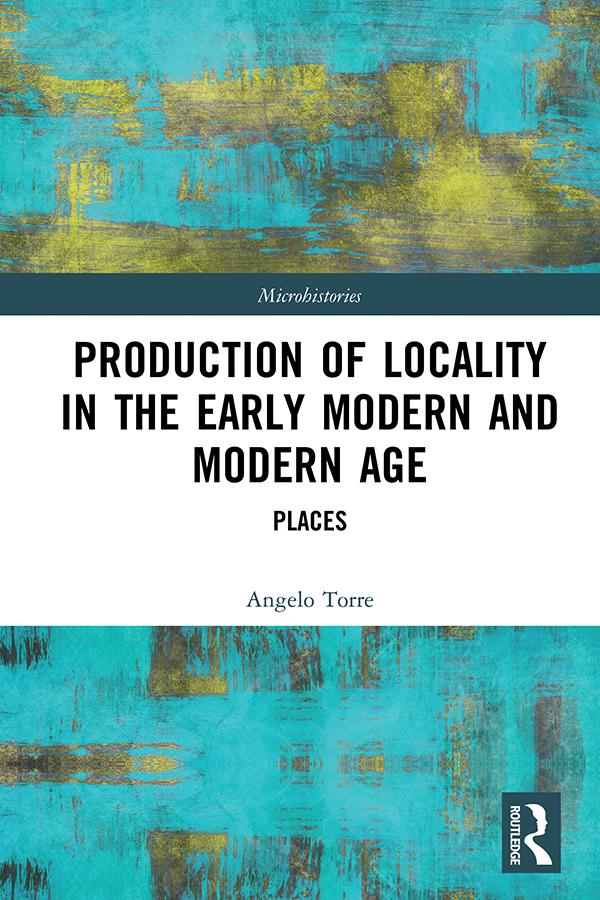
This book is a microhistory study of village settlements in early modern Northwest Italy that aims to expand the notion of place to include the process of producing a locality; that is, the production of native local subjects through practices, rituals and other forms of collective action.
Undertaking a micro-analytical approach, the book examines the customs and practices associated with typically fragmented and polycentric Italian village settlements to analyze the territorial tensions between various segments of a village and its neighbors. The microspatial analysis reveals how these tensions are the expressions of conflictual relationships between lay, ecclesiastical and charitable bodies culminating in a "culture of fragmentation" that impacts local economic and political practices. The book also traces how the production of locality survived throughout the nineenth and twentieth century and is still observed today. In this light, the study of practices and policies of locality over time that this book undertakes is an essential tool to better understand the nature and role of these social bonds in today’s society.
Archival records and the methods for approaching this source material are included within the text, making it an accessible and invaluable book for students and teachers of social and cultural history.
Pay easily by card, Klarna, Apple Pay or Google Pay. Not happy? You always have a 14-day money-back guarantee. Read more in our terms. If you have any questions, email us at hello@memmo.org.
Memmo makes studying easier – wherever you are in the world. We bring your course books and smart study tools together in one place: summaries, quizzes, podcasts and flashcards. Plus Ted, your study buddy who answers anything you wonder. Over 50,000 students already study here – built to help you learn faster and stress less.