
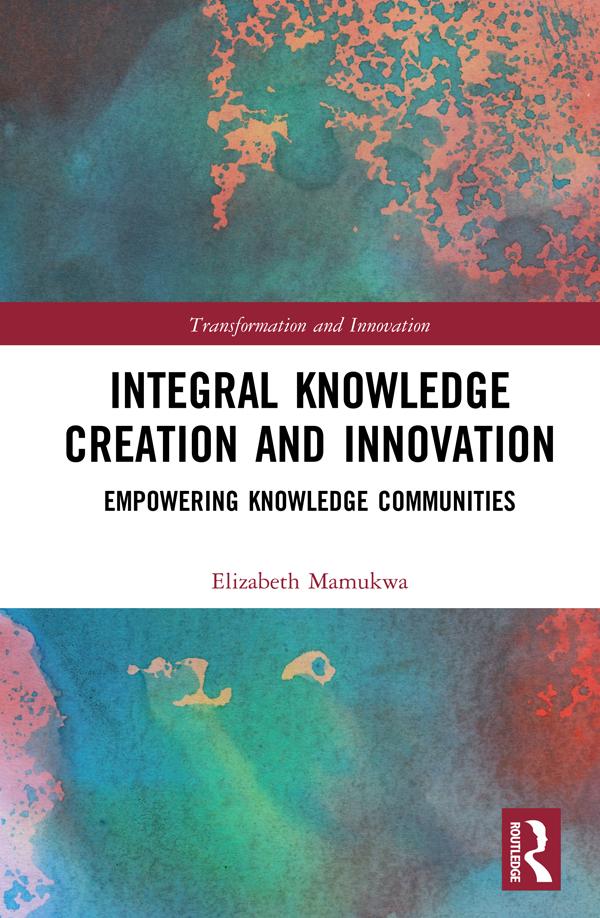
This work focuses on the creation of new knowledge, and how this has happened throughout all ages, as far back as the time of ancient philosophy to today. A product of integral research, it covers the process of creating new knowledge, leveraging existing knowledge, sometimes resulting in cutthroat innovations. It also includes knowledge systems such as conventional university systems to Mode 2 university concepts, culminating on integral research to innovation.
This book will help the reader to realise that the subject of knowledge creation is no longer business as usual. Many innovations have been created for human benefit in general, but such innovations may have benefited only parts of society. The challenge in the world is that, while new innovations may be brilliant, there are sections of society who continue to slip into poverty. Modern innovators must also consider such communities and come up with appropriate interventions. This book will open the eyes of innovators to new possibilities. In addition, the subject of knowledge should not be an elitist affair. One may stand to gain a lot by seeing the knowledge in other people, whatever their station in life. This realisation can enable serious innovators to widen their scope in terms of the sources of existing knowledge which can be improved and reassessed as new knowledge. Such existing knowledge can be identified by engaging the very communities that may be affected by a problem or challenge. Such communities will have had time to interrogate their situations and think of possible solutions to such, though they might not have the economic capacity to implement such solutions. This is always a useful starting point if one is seeking a solution to a community problem.
This book will be useful to students interested in the subject of knowledge and innovation, from under-graduate to PhD level. It will also benefit captains of industry, executives and managers who are interested in improving their knowledge improvement cycles in their companies.
Pay easily by card, Klarna, Apple Pay or Google Pay. Not happy? You always have a 14-day money-back guarantee. Read more in our terms. If you have any questions, email us at hello@memmo.org.
Memmo makes studying easier – wherever you are in the world. We bring your course books and smart study tools together in one place: summaries, quizzes, podcasts and flashcards. Plus Ted, your study buddy who answers anything you wonder. Over 50,000 students already study here – built to help you learn faster and stress less.