
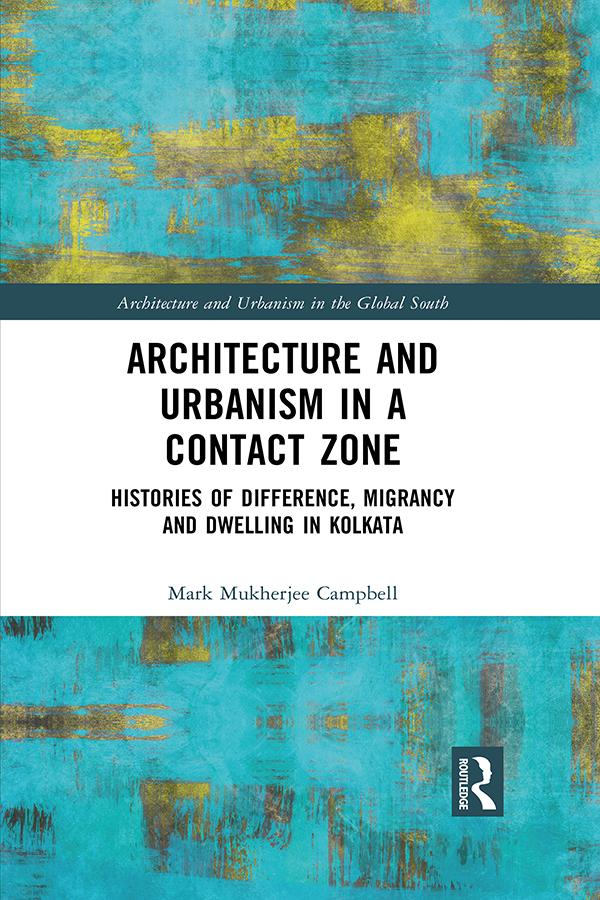
This book explores how histories of migration, cultural encounter and transculturation have shaped formations of urban space, domestic architecture and cultural modernity in Kolkata from the early colonial period to the beginning of the era of India’s economic liberalization. It charts how these themes were manifest in what was an important ‘contact zone’ in the history of globalization and the modern city.
Drawing on a wide range of resources and representations, from urban plans and architectural drawings to European travel journals and Bengali literature and cinema, the book investigates the history of Kolkata through an examination of key urban and architectural spaces across the colonial and postcolonial epochs. Through illustrated chapters, it sheds new light on questions of difference and segregation, cultural hybridity, migration, and entanglements of tradition and modernity in the city, analyzing spaces inhabited by a diverse range of cultures, including several neglected in previous studies.
Architecture and Urbanism in a Contact Zone offers an instructive contribution to the fields of global architectural history and theory, urban studies and postcolonial cultural studies for scholars, researchers and students alike.
Pay easily by card, Klarna, Apple Pay or Google Pay. Not happy? You always have a 14-day money-back guarantee. Read more in our terms. If you have any questions, email us at hello@memmo.org.
Memmo makes studying easier – wherever you are in the world. We bring your course books and smart study tools together in one place: summaries, quizzes, podcasts and flashcards. Plus Ted, your study buddy who answers anything you wonder. Over 50,000 students already study here – built to help you learn faster and stress less.