
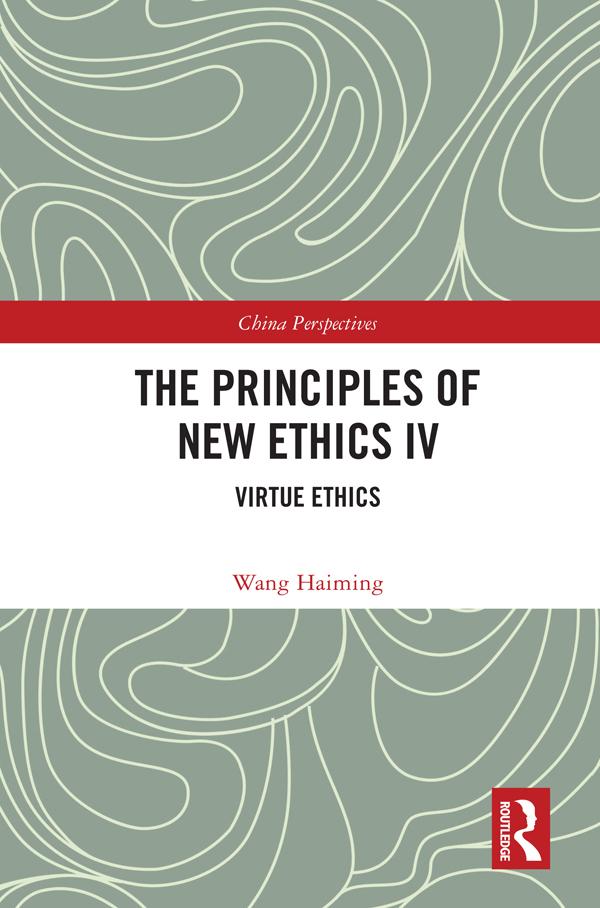
From Descartes to Spinoza, Western philosophers have attempted to propose an axiomatic systemization of ethics. However, without consensus on the contents and objects of ethics, the system remains incomplete. This four-volume set presents a model that highlights a Chinese philosopher’s insights into ethics after a 22-year study. Three essential components of ethics are examined: meta-ethics, normative ethics, and virtue ethics.
In this volume, the author analyzes the relationship between people’s sense of reputation, the political and economic status of a nation, and the observation of virtue ethics, and he argues that reputation can encourage people to conform to virtue ethics. In addition, a nation’s political and economic status is closely connected to people’s virtue ethics. That is, people will have higher virtue ethics when constitutional democracy, a market economy without government control, freedom of speech, and the moral system of liberalism and egalitarianism are established in a nation.
This title is an essential read for students and scholars of ethics and philosophy in general.
Pay easily by card, Klarna, Apple Pay or Google Pay. Not happy? You always have a 14-day money-back guarantee. Read more in our terms. If you have any questions, email us at hello@memmo.org.
Memmo makes studying easier – wherever you are in the world. We bring your course books and smart study tools together in one place: summaries, quizzes, podcasts and flashcards. Plus Ted, your study buddy who answers anything you wonder. Over 50,000 students already study here – built to help you learn faster and stress less.