
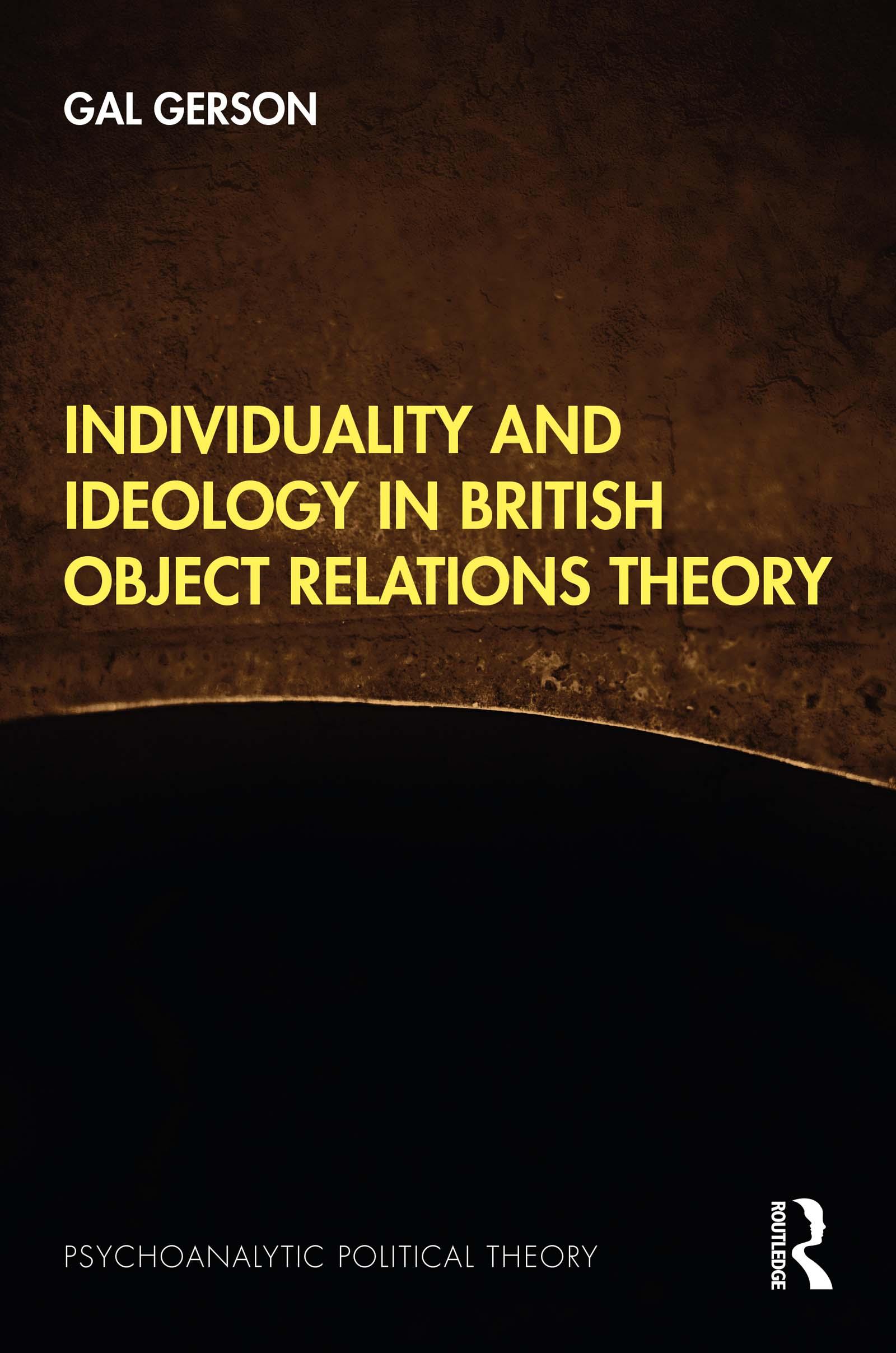
Following the work of prominent object relations theorists, such as Fairbairn, Suttie and Winnicott, Gal Gerson explores the correlation between analytical theory and intellectual environment in two ways. He notes the impact that the British object relations school had on both psychology and wider culture, and suggests that the school’s outlook involved more than a clinical choice.
Gerson first interprets the object relations model as a political theory that completes a certain internal development within liberalism. He later outlines the relationship between the analytical theory and the historical setting in which it formed and took root. By engaging with these questions, Gerson demonstrates the deeper structure and implications of object relation theory for social philosophy. This allows him to answer questions such as: ‘What kind of social arrangements do we endorse when we accept object relations theory as a fair description of mind?’; ‘What beliefs about power, individuality, and household structure do we take in? What do we give up when doing so?’; and, lastly, ‘What does it say about contemporary advanced societies that they have taken in much of the theory’s content?’
Proposing a novel rethinking of human nature, Individuality and Ideology in British Object Relations Theory provides much-needed insight into how this school of psychoanalytic theory has impacted contemporary social and political life.
Pay easily by card, Klarna, Apple Pay or Google Pay. Not happy? You always have a 14-day money-back guarantee. Read more in our terms. If you have any questions, email us at hello@memmo.org.
Memmo makes studying easier – wherever you are in the world. We bring your course books and smart study tools together in one place: summaries, quizzes, podcasts and flashcards. Plus Ted, your study buddy who answers anything you wonder. Over 50,000 students already study here – built to help you learn faster and stress less.