
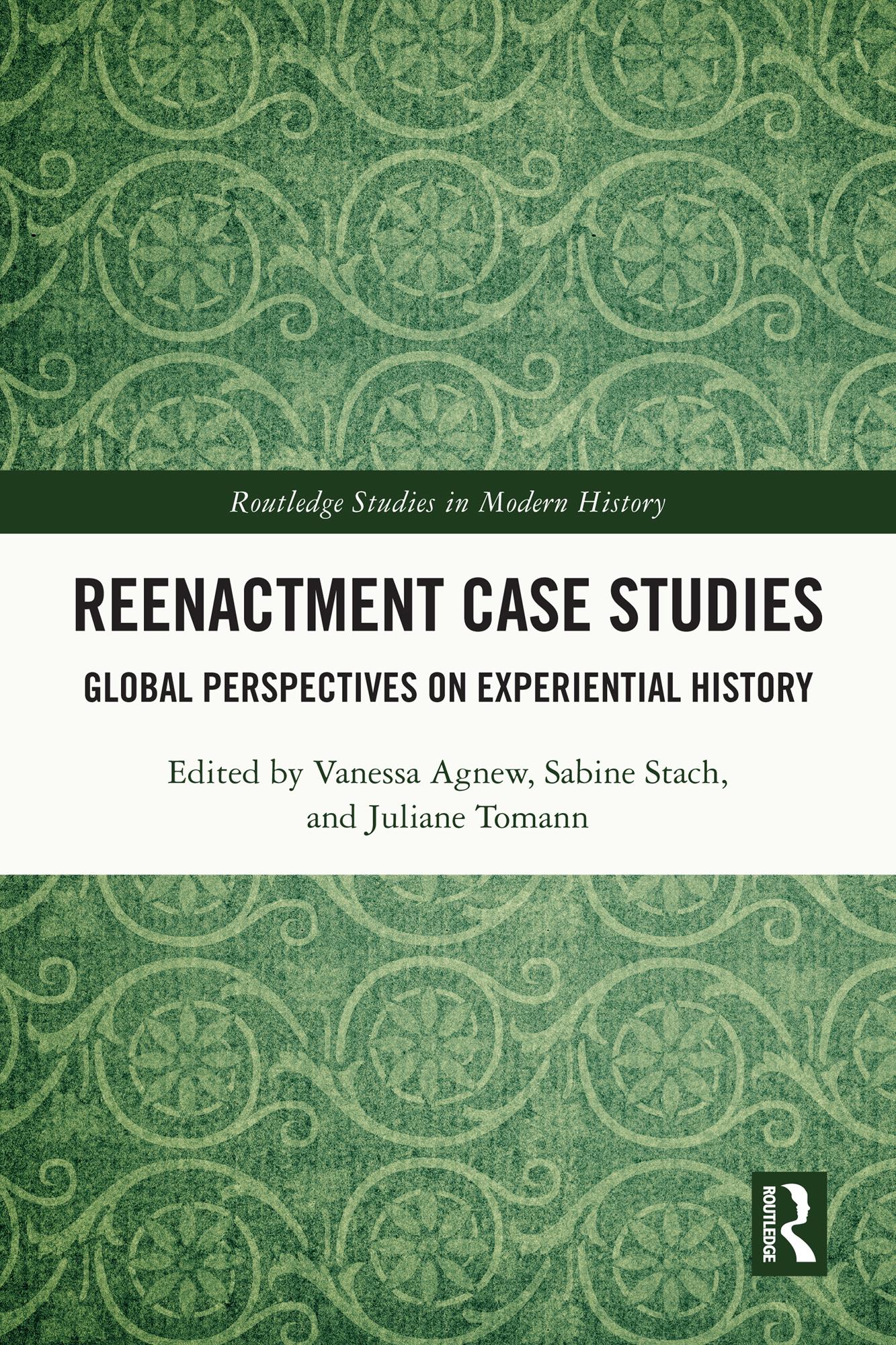
Reenactment Case Studies: Global Perspectives on Experiential History examines reenactment's challenge to traditional modes of understanding the past, asking how experience-based historical knowledge-making relates to memory-making and politics.
Reenactment is a global phenomenon that ncompasses living history, historical reality television, performance art, theater, historically-informed music performance, experimental archeology, pilgrimage, battle reenactment, live-action role play, and other forms. These share a concern with simulating the past via authenticity, embodiment, affect, the performative and subjective. As such, reenactment constitutes a global form of popular historical knowledge-making, representation, and commemoration. Yet, in terms of its historical subject matter, styles, and subcultures, reenactment is often nationally or locally inflected. he book thus asks how domestic reenactment practices relate to global ones, as well as to the spread of new populisms, and postcolonial and decolonizing movements. he book is the first to address these questions through reenactment case studies drawn from various world regions.
Forming a companion volume to the Reenactment Studies Handbook: Key Terms in the Field (2020), Reenactment Case Studies s aimed at a wide academic readership, especially in the fields of istory, film studies, memory studies, performance studies, museum and heritage studies, cultural and literary studies, and anthropology.
Pay easily by card, Klarna, Apple Pay or Google Pay. Not happy? You always have a 14-day money-back guarantee. Read more in our terms. If you have any questions, email us at hello@memmo.org.
Memmo makes studying easier – wherever you are in the world. We bring your course books and smart study tools together in one place: summaries, quizzes, podcasts and flashcards. Plus Ted, your study buddy who answers anything you wonder. Over 50,000 students already study here – built to help you learn faster and stress less.