
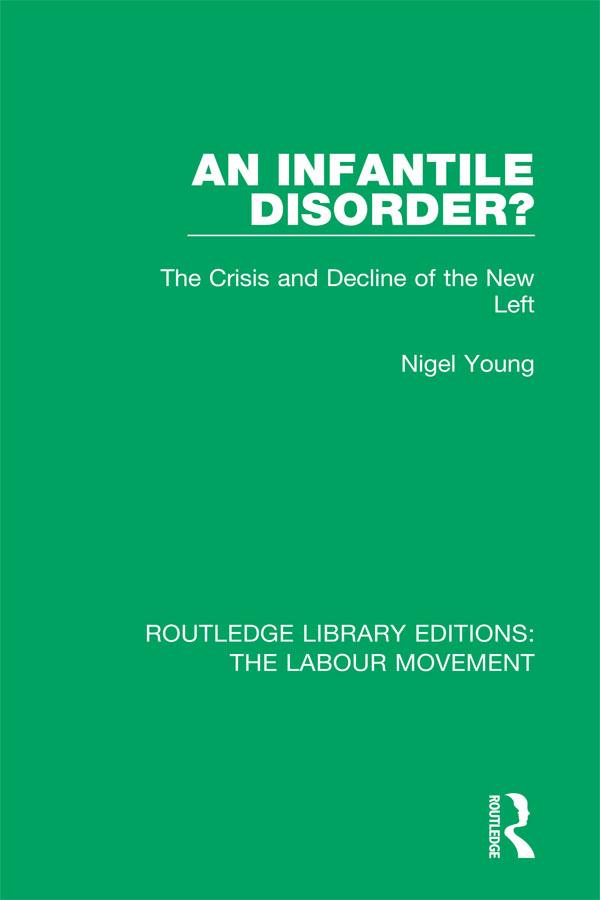
First published in 1977. The New Left, as an organised political phenomenon, came – and went – largely in the 1960s. Was the Movement that went into precipitate decline after 1969 the same New Left that had developed a decade earlier? Nigel Young’s thesis is that the core New Left, as it had evolved by the mid-1960s, had a unique identity that set it apart from other Old Left and Marxist groups. He believes that this was dissipated in the later developments of the black and student movements, and in the opposition to the Vietnam war. By 1968 – the watershed year – an acute ‘identity-crisis’ had set in within the Movement and became the major source of the New Left’s disintegration.
Nigel Young traces the Movement’s growth and crisis mainly in Britain and America, where it reached its greater strength, but attention is also paid to parallel developments in similar movements elsewhere. He analyses the crisis in terms of the interrelationship between dilemmas of strategy and ideas, and the external events which tend to reinforce the tendencies toward elitism, intolerance and violence, and produce organisational breakdown.
Pay easily by card, Klarna, Apple Pay or Google Pay. Not happy? You always have a 14-day money-back guarantee. Read more in our terms. If you have any questions, email us at hello@memmo.org.
Memmo makes studying easier – wherever you are in the world. We bring your course books and smart study tools together in one place: summaries, quizzes, podcasts and flashcards. Plus Ted, your study buddy who answers anything you wonder. Over 50,000 students already study here – built to help you learn faster and stress less.