
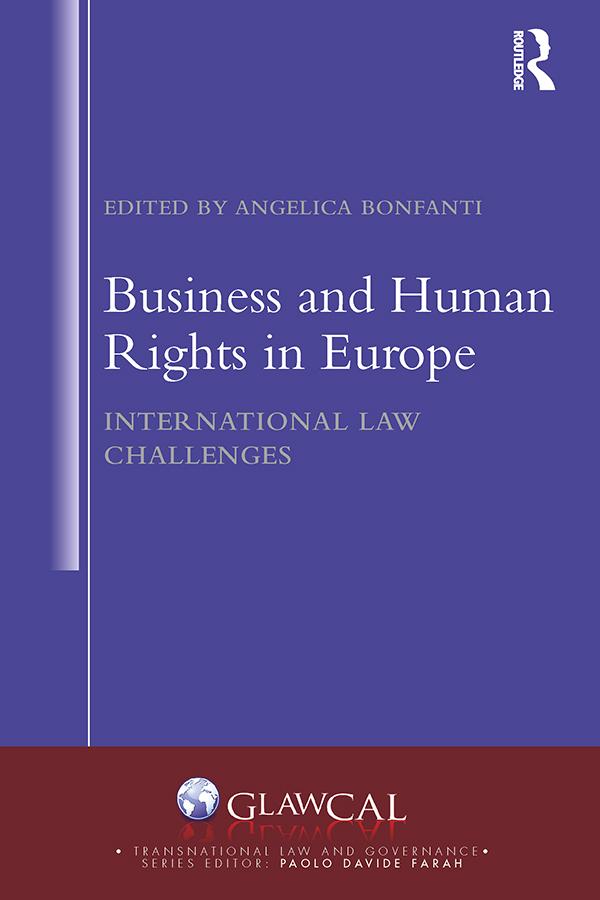
Transnational business activities are important drivers of growth for developing and the least developed countries. However, they can also negatively impact the enjoyment of human rights. In some cases, multinational enterprises (MNEs) have even been accused of grave human rights abuses in the territory of the states where their subsidiaries operate. Since the parent companies of many MNEs are incorporated under the law of European states, those countries’ domestic law and the European legal framework play a crucial role in establishing how their activities should be conducted – also throughout their supply chains – and which remedies will be available when corporate human rights violations occur. In recent years, the European Union, the Council of Europe and their Member States have been adopting policies and legislation to ensure respect for human rights by businesses and have developed a body of related case law. These legal instruments can be considered the European responses to the challenges posed at international-law level, and they constitute the focus of research of this book. Through its collected chapters – written by scholars and practitioners under the direction of the editor, Angelica Bonfanti – the book identifies the European solutions to the business and human rights international legal issues, provides an overall assessment of their effectiveness, and examines their potential evolution.
Pay easily by card, Klarna, Apple Pay or Google Pay. Not happy? You always have a 14-day money-back guarantee. Read more in our terms. If you have any questions, email us at hello@memmo.org.
Memmo makes studying easier – wherever you are in the world. We bring your course books and smart study tools together in one place: summaries, quizzes, podcasts and flashcards. Plus Ted, your study buddy who answers anything you wonder. Over 50,000 students already study here – built to help you learn faster and stress less.