
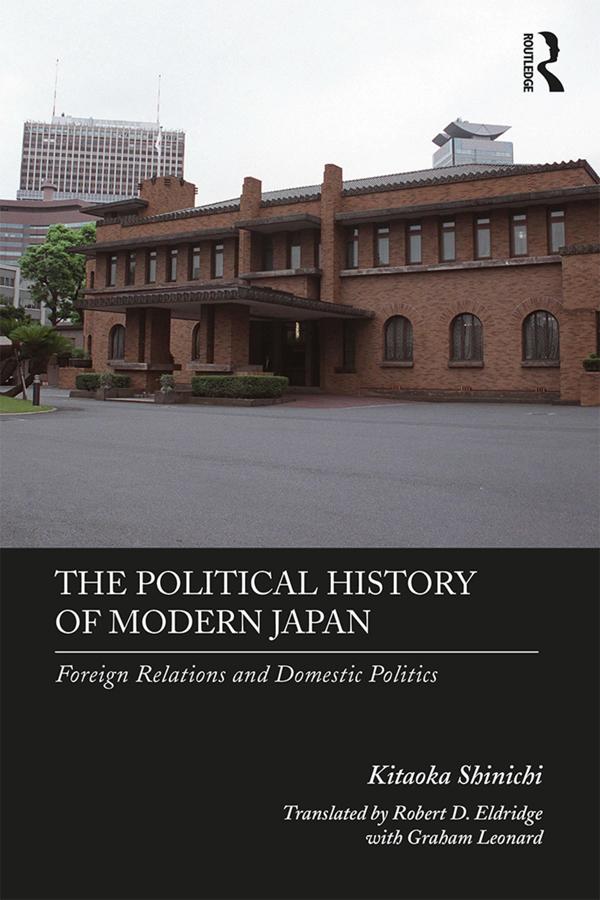
Spanning the 130-year period between the end of the Tokugawa Era and the end of the Cold War, this book introduces students to the formation, collapse, and rebirth of the modern Japanese state. It demonstrates how, faced with foreign threats, Japan developed a new governing structure to deal with these challenges and in turn gradually shaped its international environment. Had Japan been a self-sufficient power, like the United States, it is unlikely that external relations would have exercised such great control over the nation. And, if it were a smaller country, it may have been completely pressured from the outside and could not have influenced the global stage on its own. For better or worse therefore, this book argues, Japan was neither too large nor too small.
Covering the major events, actors, and institutions of Japan’s modern history, the key themes discussed include:
- Building the Meiji state and Constitution.
- The establishment of Parliament.
- The First Sino-Japanese and Russo-Japanese Wars.
- Party Politics and International Cooperation.
- The Pacific War.
- Development of LDP politics.
- Changes in the international order and the end of the Cold War.
This book, written by one of Japan's leading experts on Japan's political history, will be an essential resource for students of Japanese modern history and politics.
Pay easily by card, Klarna, Apple Pay or Google Pay. Not happy? You always have a 14-day money-back guarantee. Read more in our terms. If you have any questions, email us at hello@memmo.org.
Memmo makes studying easier – wherever you are in the world. We bring your course books and smart study tools together in one place: summaries, quizzes, podcasts and flashcards. Plus Ted, your study buddy who answers anything you wonder. Over 50,000 students already study here – built to help you learn faster and stress less.