
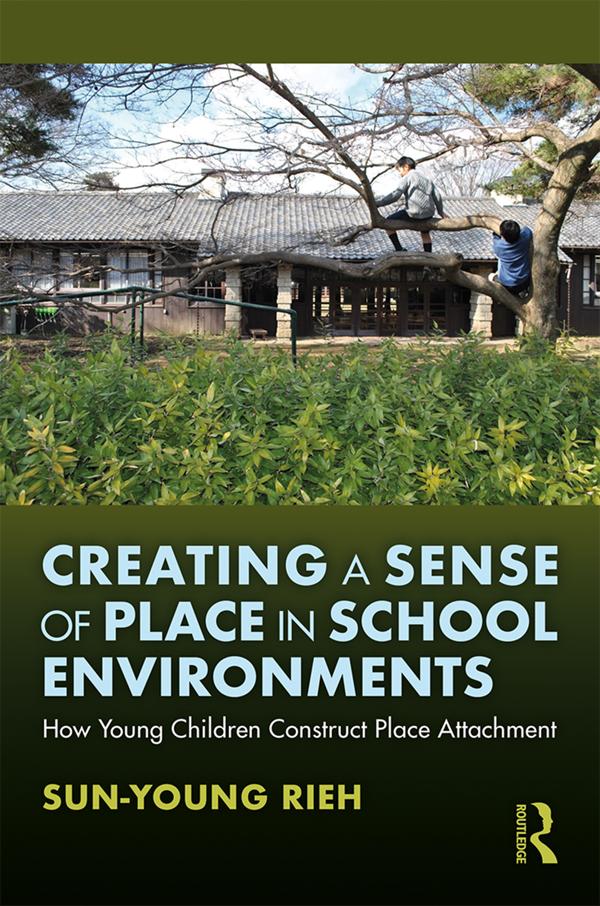
Creating a Sense of Place in School Environments guides its readers to the characteristics that tend to generate a sense of place through children’s vivid descriptions of their school and provides a body of critical information that can be employed to design a better school environment that can imprint cherished childhood memories.
The childhood school environment calls for special attention regarding the sense of place it creates. The sense of place in childhood both affects children's current quality of life and frames their lasting world view. It is well known that children's cognitive development is closely related to their place attachment to their surroundings, and that children’s adaptation to a given environment depends on how such place attachment can be created. Therefore, it is natural that people’s identity in the world is the accumulation of their experience of place while in childhood.
Cross-checking between the imprint of adults' memories of places in school and children’s current "lived experience" of their favorite school place confirmed that certain spatial configurations, which the author herein refers to as "place generators" can generate positive attributes of physical settings that construct a sense of place and last as lifelong memories. It is an ideal read for academics, students, and professionals.
Pay easily by card, Klarna, Apple Pay or Google Pay. Not happy? You always have a 14-day money-back guarantee. Read more in our terms. If you have any questions, email us at hello@memmo.org.
Memmo makes studying easier – wherever you are in the world. We bring your course books and smart study tools together in one place: summaries, quizzes, podcasts and flashcards. Plus Ted, your study buddy who answers anything you wonder. Over 75,000 students already study here – built to help you learn faster and stress less.