
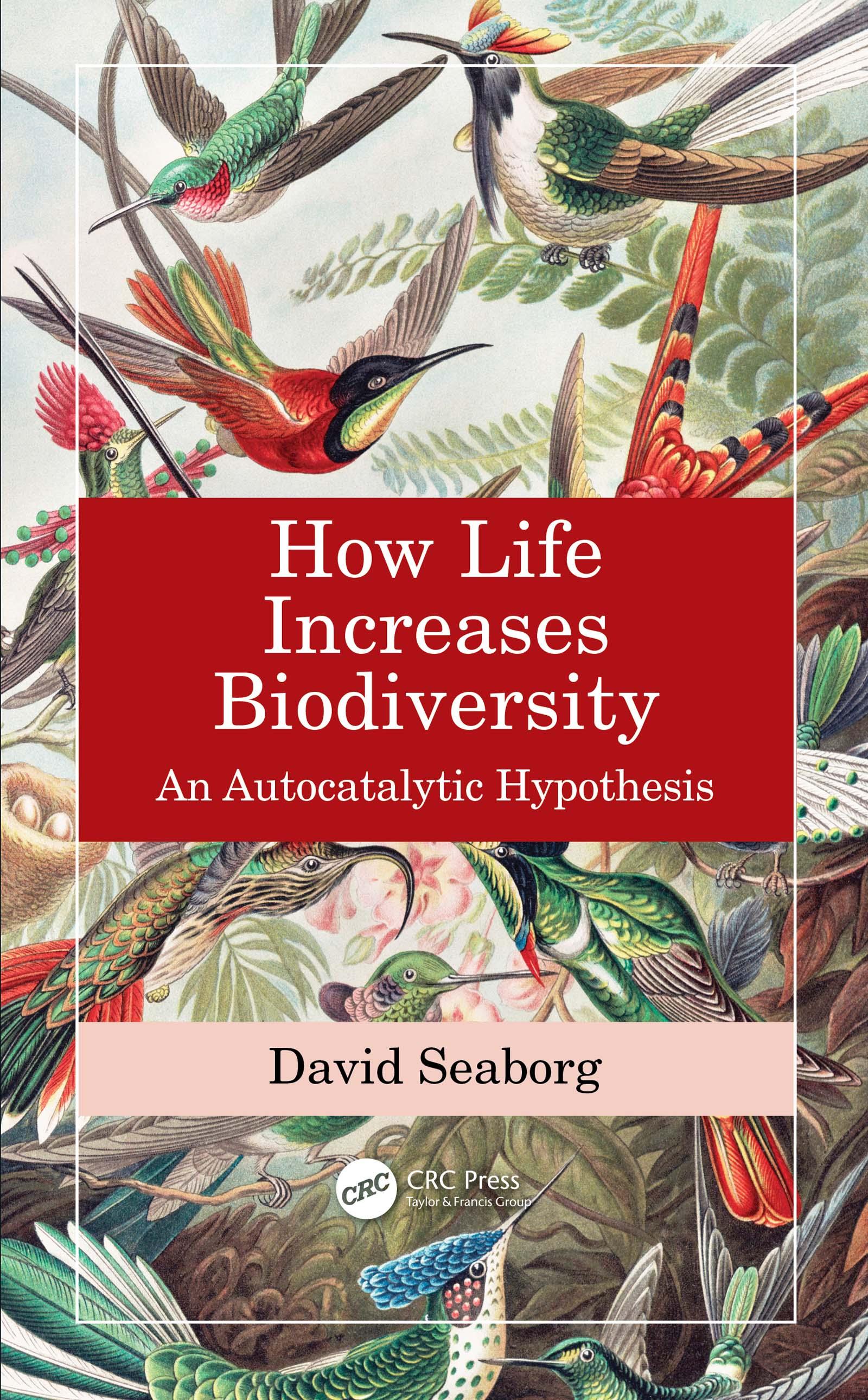
This book argues that organisms and their interactions create and maximize biodiversity. The evidence for this autocatalytic hypothesis has been collated and integrated into this provocative argument. Natural selection favors the increase of biodiversity. Organisms can be causative agents contributing to major macroevolutionary transitions. Species tend to have a net positive effect on biodiversity. All species are ecosystem engineers. Mutualism and commensalism are common and fundamental, and these coevolved interspecific interactions frequently generate enormous increases in biodiversity. Competition generally does not decrease biodiversity, and often leads to evolutionary innovation. Plants are ecosystem engineers that have made Earth more favorable to life and increased diversity in many ways. Herbivores and predators increase the diversity of the species they consume, and are necessary for ecosystem stability. Decomposers are essential to ecosystem health. All these examples illustrate the focus of this book – that organisms and their interactions stimulate biodiversity, and ecosystems maximize it.
Key Features
• Describes a hypothesis that life itself generates higher biodiversity
• Suggests a highly modified version of the established paradigm in population biology and evolution
• Asserts that all species are ecosystem engineers with a net positive effect on biodiversity and their ecosystems
• Suggests that mutualism and commensalism are the rule
• Presents a novel view likely to elicit deeper discussions of biodiversity
Related Titles
Dewdney, A. K. Stochastic Communities: A Mathematical Theory of Biodiversity (ISBN
978-1-138-19702-2)
Curry, G. B. and C. J. Humphries, eds. Biodiversity Databases: Techniques, Politics, and
Applications (ISBN 978-0-367-38916-1)
Pullaiah, T, ed. Global Biodiversity. 4 Volume Set (ISBN 978-1-77188-751-9)
Pay easily by card, Klarna, Apple Pay or Google Pay. Not happy? You always have a 14-day money-back guarantee. Read more in our terms. If you have any questions, email us at hello@memmo.org.
Memmo makes studying easier – wherever you are in the world. We bring your course books and smart study tools together in one place: summaries, quizzes, podcasts and flashcards. Plus Ted, your study buddy who answers anything you wonder. Over 50,000 students already study here – built to help you learn faster and stress less.