
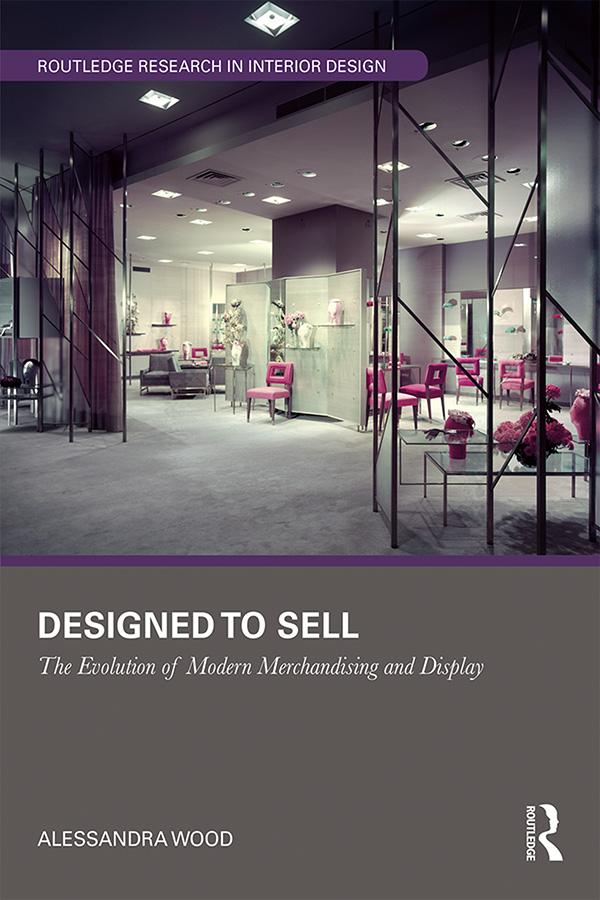
Designed to Sell presents an engaging account of mid-twentieth-century department store design and display in America from the 1930s to the 1960s. It traces the development of postwar philosophies of retail design that embodied aesthetics and function and new modes of merchandise display, resulting in the emergence of a new type of industrial designer.
The evolution of aesthetics in department stores during this period reflected larger cultural shifts in consumer behaviour and lifestyle. Designed to Sell explores these changes using five key case studies and original archival sources to reveal the link between designers and consumption beyond the design of individual objects. It argues that design is not simply connected to retail consumption, but that it is capable of controlling how and where customers shop and what they are drawn to purchase.
This book contextualises this discussion and brings it up to date for students and scholars interested in design, retail, and interior history.
Pay easily by card, Klarna, Apple Pay or Google Pay. Not happy? You always have a 14-day money-back guarantee. Read more in our terms. If you have any questions, email us at hello@memmo.org.
Memmo makes studying easier – wherever you are in the world. We bring your course books and smart study tools together in one place: summaries, quizzes, podcasts and flashcards. Plus Ted, your study buddy who answers anything you wonder. Over 50,000 students already study here – built to help you learn faster and stress less.