
Heavy metals and metalloids, singly or in combination, induce toxic manifestations either through acute or chronic pathology. In particular, long-term chronic exposure to diverse heavy metals and metalloids to humans and animals can lead to numerous physical, muscular, neurological, nephrological, and diverse degenerative diseases and dysfunctions, including multiple sclerosis, muscular dystrophy, Parkinson’s and Alzheimer’s diseases, cardiovascular disorders, and several others.
Recognized heavy metals such as lead, mercury, arsenic, cadmium, thallium, and hexavalent chromium are known for enormous toxicity. The immediate vital signs of acute heavy metal exposure include nausea, vomiting, diarrhea, and acute abdominal pain. Mercury has been identified as the most toxic heavy metal, and mercury poisoning is known as acrodynia or pink disease. Similarly, lead, another toxic heavy metal, was at one time an integral part of painting.
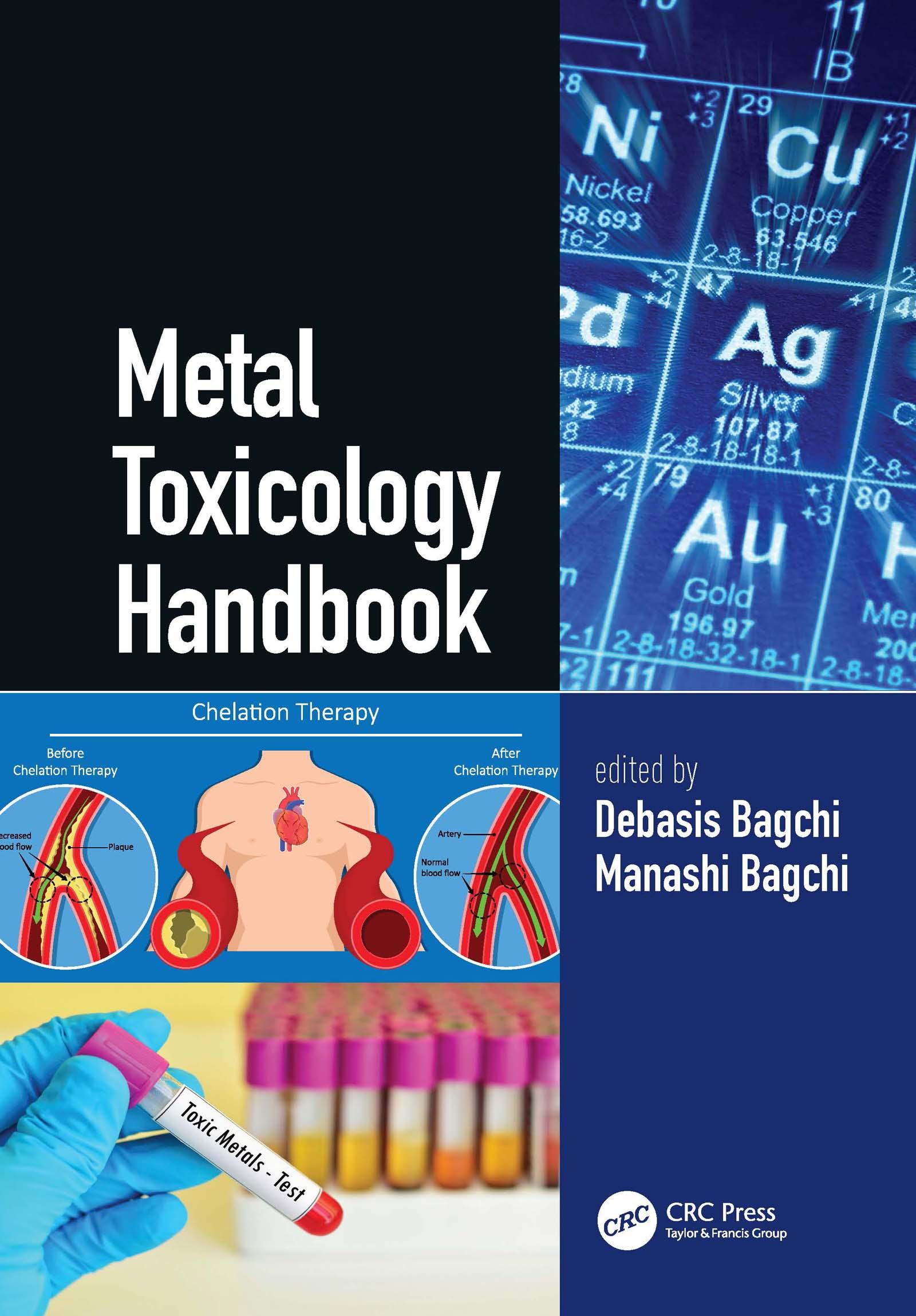
Metal Toxicology Handbook further explains and discusses the varying attributes of metals, discussing toxicity, safety, and proper human utilization of metals. Beginning with a broad overview of metals, metalloids, redox biology, and neurodegeneration and going further into the roles, benefits, and toxicity of metals with each section, the text contains 28 chapters from eminent researchers and scientists in their respective fields and is a must-have for anyone researching the potential toxicity in metals.
Key Features
- Discusses the pathology of metal toxicity
- Highlights the benefits of metals
- Explains the mechanism and salient features of restoring metabolic homeostasis
- Highlights dose-dependent beneficial and adverse effects of vanadium safety and toxicity
The initial introductory section provides a broad overview of metals, metalloids, redox biology, and neurodegeneration. The second section discusses the pathology of metal toxicity in two chapters, while the third section highlights the mechanism and salient features of restoring metabolic homeostasis in two chapters. The fourth section demonstrates the aspect of radionuclides toxicity. In a change of pace, the fifth section discusses the benefits of metals in four chapters. The sixth section, titled "Toxic Manifestations by Diverse Heavy Metals and Metalloids," provides fourteen chapters that discuss the toxicological mechanism and manifestation of individual metals.
The editors have crafted a commentary titled "A Treatise on Metal Toxicity" and summarized a vivid scenario of metal toxicity and its consequences.
Pay easily by card, Klarna, Apple Pay or Google Pay. Not happy? You always have a 14-day money-back guarantee. Read more in our terms. If you have any questions, email us at hello@memmo.org.
Memmo makes studying easier – wherever you are in the world. We bring your course books and smart study tools together in one place: summaries, quizzes, podcasts and flashcards. Plus Ted, your study buddy who answers anything you wonder. Over 75,000 students already study here – built to help you learn faster and stress less.