
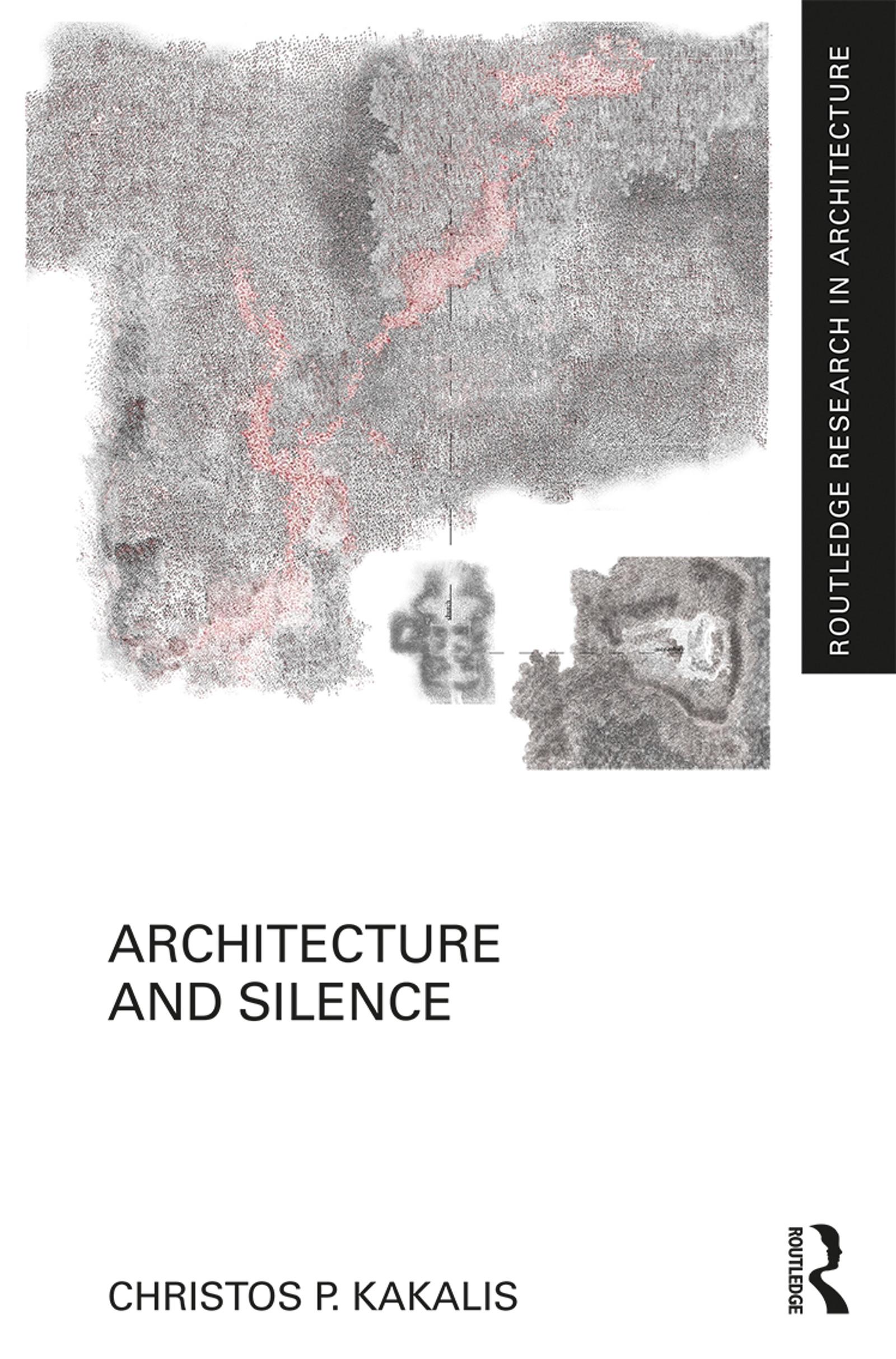
This book explores the role of silence in how we design, present and experi-ence architecture. Grounded in phenomenological theory, the book builds on historical, theoretical and practical approaches to examine silence as a methodological tool of architectural research and unravel the experiential qualities of the design process.
Distinct from an entirely soundless experience, silence is proposed as a material condition organically incorporated into the built and natural landscape. Kakalis argues that, either human or atmospheric, silence is a condition of waiting for a sound to be born or a new spatio-temporal event to emerge. In silence, therefore, we are attentive and attuned to the atmos-phere of a place. The book unpacks a series of stories of silence in religious topographies, urban landscapes, film and theatre productions and architec-tural education with contributed chapters and interviews with Jeff Malpas and Alberto Pérez-Gómez.
Aimed at postgraduate students, scholars and researchers in architectural theory, it shows how performative and atmospheric qualities of silence can build a new understanding of architectural experience.
Pay easily by card, Klarna, Apple Pay or Google Pay. Not happy? You always have a 14-day money-back guarantee. Read more in our terms. If you have any questions, email us at hello@memmo.org.
Memmo makes studying easier – wherever you are in the world. We bring your course books and smart study tools together in one place: summaries, quizzes, podcasts and flashcards. Plus Ted, your study buddy who answers anything you wonder. Over 75,000 students already study here – built to help you learn faster and stress less.