
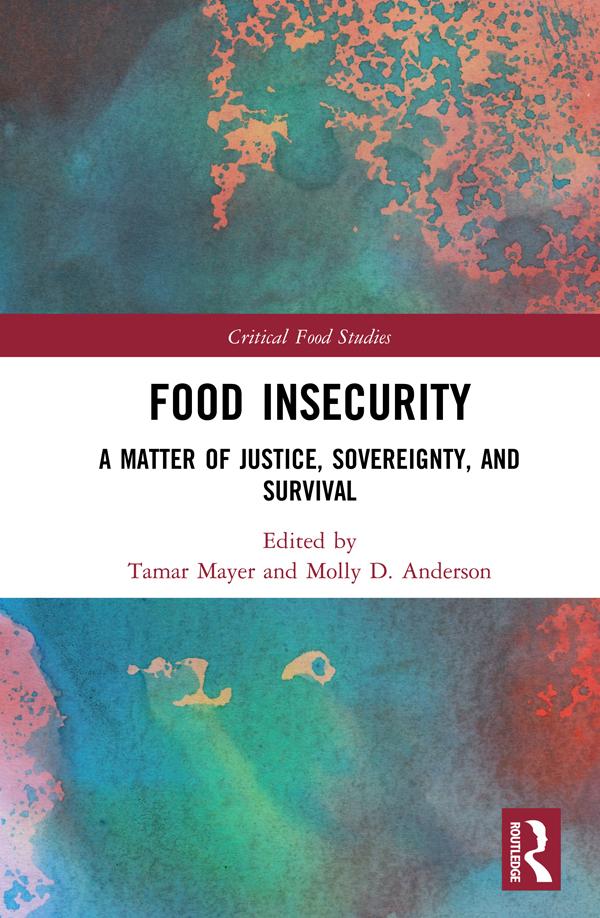
This book explores the experiences, causes, and consequences of food insecurity in different geographical regions and historical eras. It highlights collective and political actions aimed at food sovereignty as solutions to mitigate suffering.
Despite global efforts to end hunger, it persists and has even increased in some regions. This book provides interdisciplinary and historical perspectives on the manifestations of food insecurity, with case studies illustrating how people coped with violations of their rights during the war-time deprivation in France; the neoliberal incursions on food supply in Turkey, Greece, and Nicaragua; as well as the consequences of radioactive contamination of farmland in Japan. This edited collection adopts an analytical approach to understanding food insecurity by examining how the historical and political situations in different countries have resulted in an unfolding dialectic of food insecurity and resistance, with the most marginalized people—immigrants, those in refugee camps, poor peasants, and so forth—consistently suffering the worst effects, yet still maintaining agency to fight back.
The book tackles food insecurity on a local as well as a global scale and will thus be useful for a broad range of audiences, including students, scholars, and the general public interested in studying food crises, globalization, and current global issues.
Pay easily by card, Klarna, Apple Pay or Google Pay. Not happy? You always have a 14-day money-back guarantee. Read more in our terms. If you have any questions, email us at hello@memmo.org.
Memmo makes studying easier – wherever you are in the world. We bring your course books and smart study tools together in one place: summaries, quizzes, podcasts and flashcards. Plus Ted, your study buddy who answers anything you wonder. Over 50,000 students already study here – built to help you learn faster and stress less.