
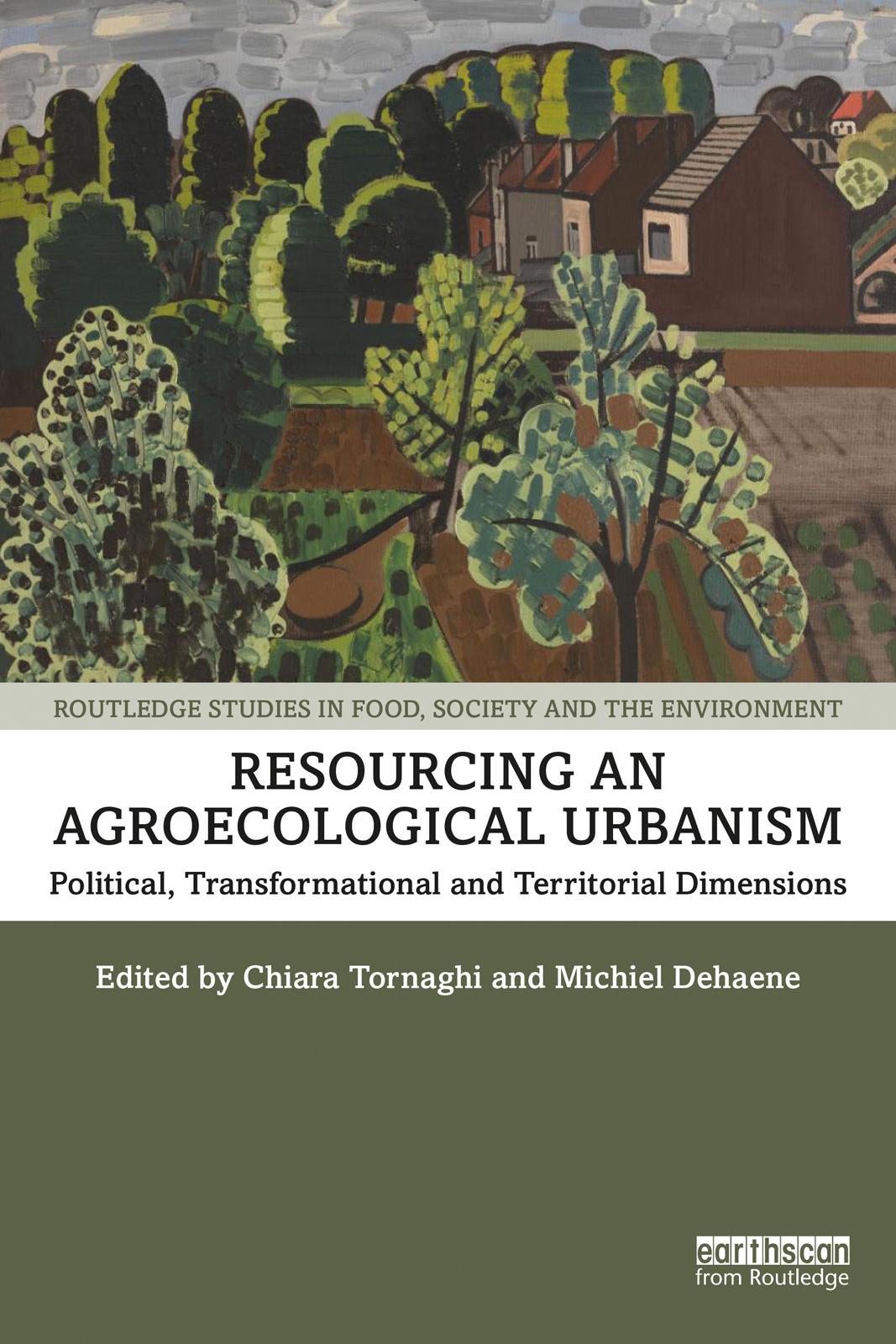
Foregrounding an innovative and radical perspective on food planning, this book makes the case for an agroecological urbanism in which food is a key component in the reinvention of new and just social arrangements and ecological practices.
Building on state-of-the-art and participatory research on farming, urbanism, food policy and advocacy in the field of food system transformation, this book changes the way food planning has been conceptualised to date and invites the reader to fully embrace the transformative potential of an agroecological perspective. Bringing in dialogue from both the rural and urban, the producer and consumer, this book challenges conventional approaches that see them as separate spheres, whose problems can only be solved by a reconnection. Instead, it argues for moving away from a ‘food-in-the-city’ approach towards an ‘urbanism’ perspective, in which the economic and spatial processes that currently drive urbanisation will be unpacked and dissected, and new strategies for changing those processes into more equal and just ones are put forward. Drawing on the nascent field of urban political agroecology, this text brings together: i) theoretical re-conceptualisations of urbanism in relation to food planning and the emergence of new agrarian questions, ii) critical analysis of experimental methodologies and performing arts for public dialogue, reflexivity and food sovereignty research, iii) experiences of resourceful land management, including urban land use and land tenure change, and iv) theoretical and practical exploration of post-capitalist economics that bring consumers and producers together to make the case for an agroecological urbanism.
Aimed at advanced students and academics in agroecology, sustainable food planning, urban geography, urban planning and critical food studies, this book will also be of interest to professionals and activists working with food systems in both the Global North and the Global South.
Pay easily by card, Klarna, Apple Pay or Google Pay. Not happy? You always have a 14-day money-back guarantee. Read more in our terms. If you have any questions, email us at hello@memmo.org.
Memmo makes studying easier – wherever you are in the world. We bring your course books and smart study tools together in one place: summaries, quizzes, podcasts and flashcards. Plus Ted, your study buddy who answers anything you wonder. Over 75,000 students already study here – built to help you learn faster and stress less.