
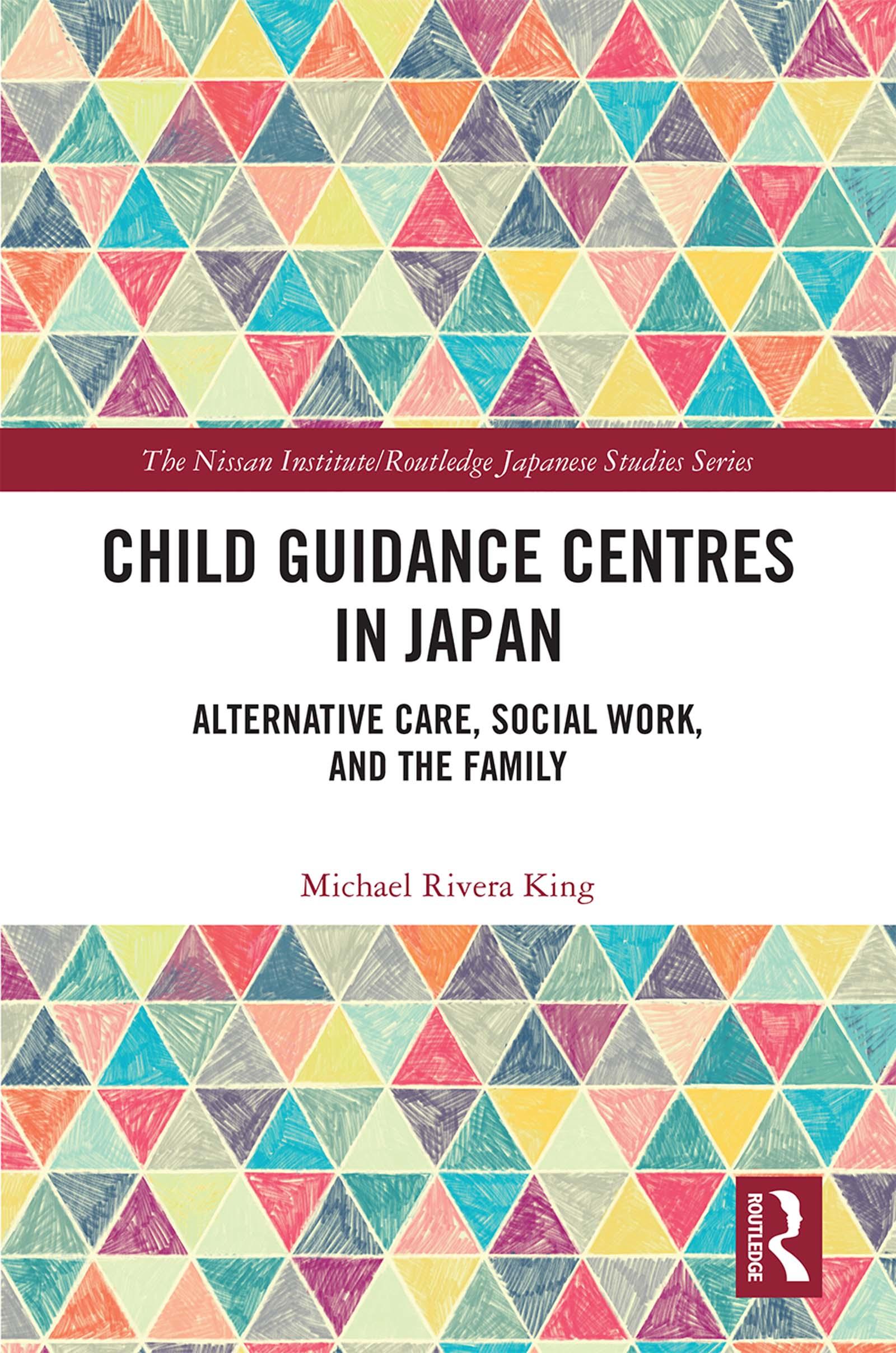
In contemporary Japan, 85% of children in alternative care remain housed in large welfare institutions, as opposed to family-based foster care. This publication examines how Japan has been isolated from global discourse on alternative care, urging a shift in social work and alternative care policies.
As the first ethnographic account from inside child guidance centres, it makes a key contribution towards understanding the closed world of Japan’s social services; including the decision-making processes by which a child is removed from the family and placed into care. In addition, regional variation in policy implementation for alternative care is outlined, with reference to detailed case studies and a discussion around organisational cultures of the child guidance centres. Where foster care is constructed as anything other than professional, it is often seen as a threat to the child’s family-bond with their natal parent and therefore not used. Child Guidance Centres in Japan destabilises this construction of the family-bond as singular and discrete, highlighting new practices in alternative care.
Child Guidance Centres in Japan: Alternative Care and the Family will be a vital resource for students, scholars of social work and Japanese studies, as well as practitioners and lobbyists involved in alternative care.
Pay easily by card, Klarna, Apple Pay or Google Pay. Not happy? You always have a 14-day money-back guarantee. Read more in our terms. If you have any questions, email us at hello@memmo.org.
Memmo makes studying easier – wherever you are in the world. We bring your course books and smart study tools together in one place: summaries, quizzes, podcasts and flashcards. Plus Ted, your study buddy who answers anything you wonder. Over 50,000 students already study here – built to help you learn faster and stress less.