
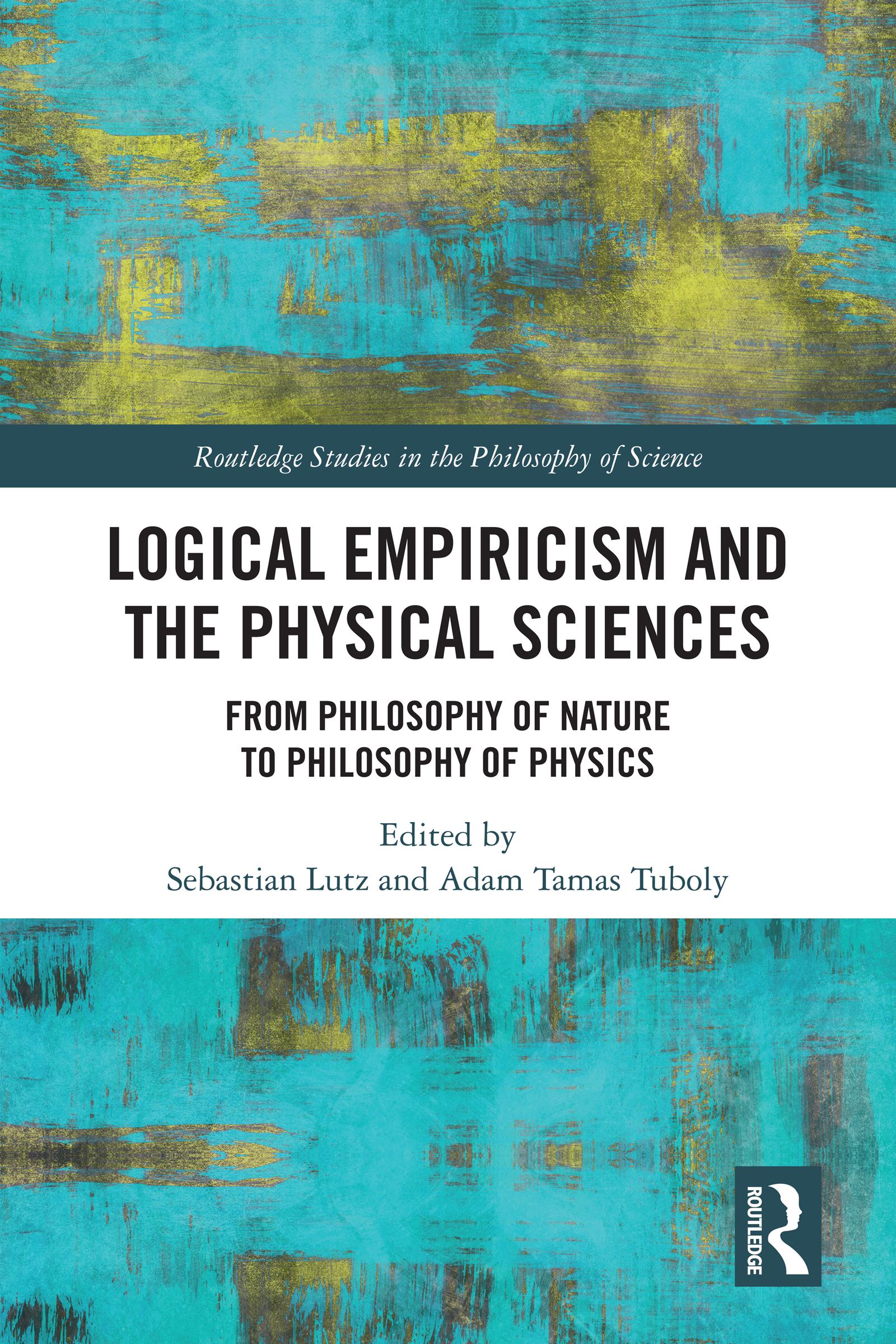
This volume has two primary aims: to trace the traditions and changes in methods, concepts, and ideas that brought forth the logical empiricists’ philosophy of physics and to present and analyze the logical empiricists’ various and occasionally contrary ideas about the physical sciences and their philosophical relevance. These original chapters discuss these developments in their original contexts and social and institutional environments, thus showing the various fruitful conceptions and philosophies behind the history of 20th-century philosophy of science.
Logical Empiricism and the Natural Sciences is divided into three thematic sections. Part I surveys the influences on logical empiricism’s philosophy of science and physics. It features chapters on Maxwell’s role in the worldview of logical empiricism, on Reichenbach’s account of objectivity, on the impact of Poincaré on Neurath’s early views on scientific method, Frank’s exchanges with Einstein about philosophy of physics, and on the forgotten role of Kurt Grelling. Part II focuses on specific physical theories, including Carnap’s and Reichenbach’s positions on Einstein’s theory of general relativity, Reichenbach’s critique of unified field theory, and the logical empiricists’ reactions to quantum mechanics. The third and final group of chapters widens the scope to philosophy of science and physics in general. It includes contributions on von Mises’ frequentism; Frank’s account of concept formation and confirmation; and the interrelations between Nagel’s, Feigl’s, and Hempel’s versions of logical empiricism.
This book offers a comprehensive account of the logical empiricists’ philosophy of physics. It is a valuable resource for researchers interested in the history and philosophy of science, philosophy of physics, and the history of analytic philosophy.
Pay easily by card, Klarna, Apple Pay or Google Pay. Not happy? You always have a 14-day money-back guarantee. Read more in our terms. If you have any questions, email us at hello@memmo.org.
Memmo makes studying easier – wherever you are in the world. We bring your course books and smart study tools together in one place: summaries, quizzes, podcasts and flashcards. Plus Ted, your study buddy who answers anything you wonder. Over 50,000 students already study here – built to help you learn faster and stress less.