
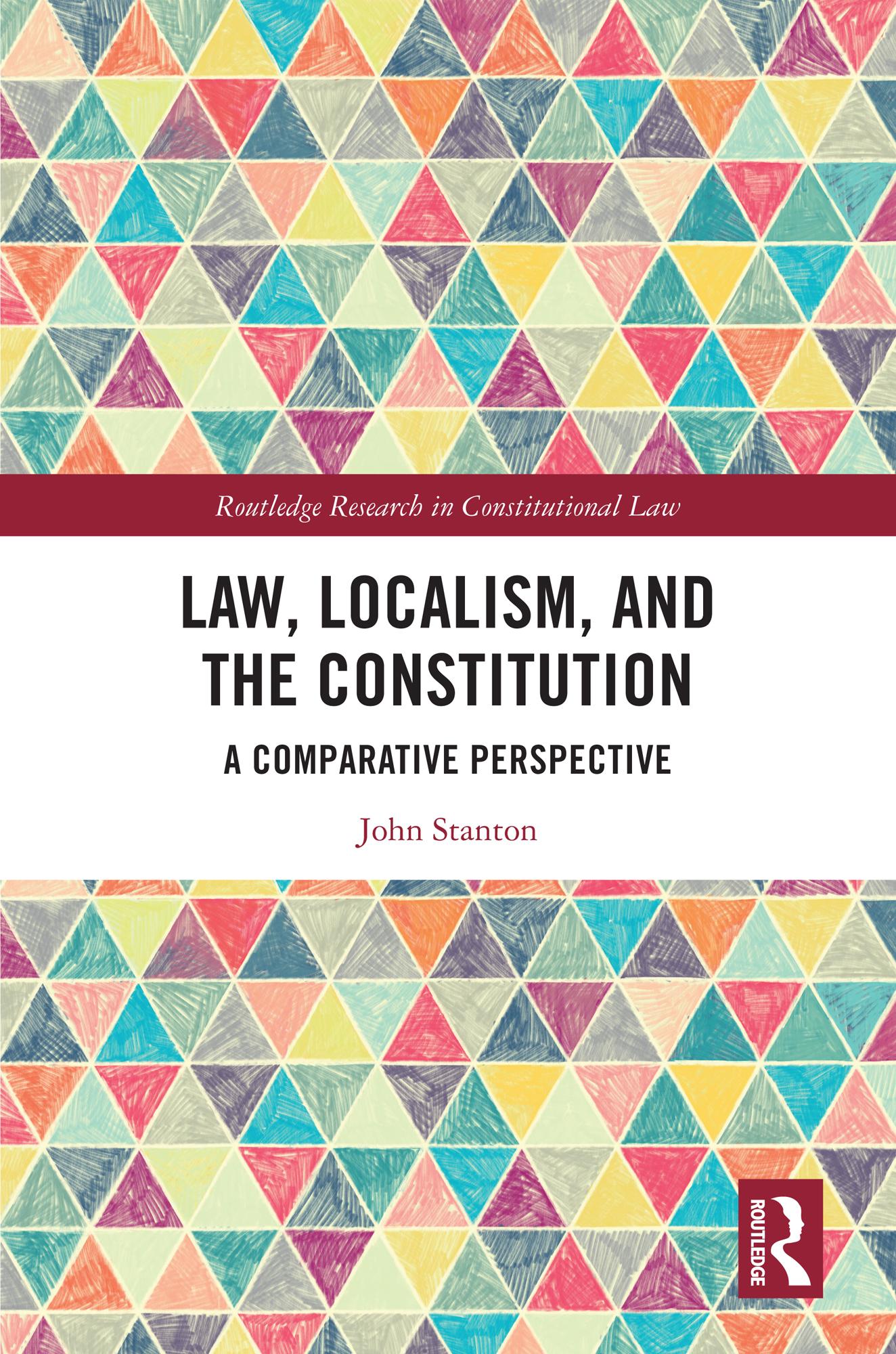
Local government affects us all. Wherever we live, in towns, cities, villages, or the smallest of communities, there are locally elected councils tasked with representing people’s interests in the running of the local area. This involves, inter alia, providing public services, maintaining local spaces, and acting as a level of democratic governance within the broader constitutional and executive structure of the state. To fulfil these responsibilities, though, local government must be democratically legitimate; it must have at its disposal reasonable means and resources to function; and it must enjoy a healthy and balanced relationship with centralised government.
This book explores and analyses the extent to which local government in the different parts of the United Kingdom is able to function effectively and democratically. It draws from local councillors’ views in analysing the state of local government under the current constitutional and governmental arrangements, discussing issues such as councils’ relationships with central government; citizen engagement; finance and public services; and the impact of recent reforms. It contrasts and compares the different approaches adopted in England, Scotland, Wales, and Northern Ireland, also setting out and discussing possible reforms of local government across the United Kingdom. While the focus is on the United Kingdom, the work includes a comparison with other relevant jurisdictions.
Pay easily by card, Klarna, Apple Pay or Google Pay. Not happy? You always have a 14-day money-back guarantee. Read more in our terms. If you have any questions, email us at hello@memmo.org.
Memmo makes studying easier – wherever you are in the world. We bring your course books and smart study tools together in one place: summaries, quizzes, podcasts and flashcards. Plus Ted, your study buddy who answers anything you wonder. Over 50,000 students already study here – built to help you learn faster and stress less.