
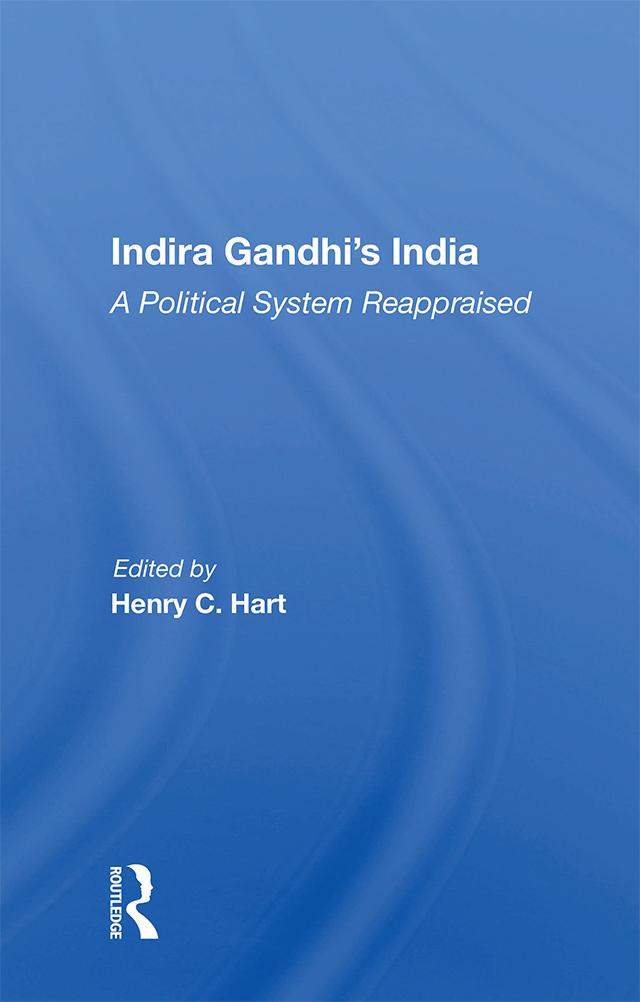
India, credited with the best institutionalized democracy of the Third World, changed in 1975, apparently overnight and at the decision of one individual, to a quasi-dictatorship. A transformation so remarkable prompted eight scholars of Indian politics to reexamine the sectors of the system they know well, seeking explanations. They reappraise the carry-over of colonial institutions and procedures, the distribution of power in the ruling party, business influence, the roles of the divided Communist parties, the position of the administrative corps and of the army, and unrest among the rural poor at its most volatile, in the state of Bihar. An introduction shows just what Mrs. Gandhi changed, the situation that triggered her action, and the justification she advances. A concluding chapter tests the facts of the Indian transformation against four major theories of political change in the developing world: projection into politics of personality conflicts of the leader, agrarian class conflict, social mobilization, and cultural assimilation and institutionalization.
Pages: 312
Category: Statsvetenskap & Politik
e-ISBN: 9780429726071
Shipping weight: 1.2 kg
Ships in: 1-2 days
Pay easily by card, Klarna, Apple Pay or Google Pay. Not happy? You always have a 14-day money-back guarantee. Read more in our terms. If you have any questions, email us at hello@memmo.org.
Memmo makes studying easier – wherever you are in the world. We bring your course books and smart study tools together in one place: summaries, quizzes, podcasts and flashcards. Plus Ted, your study buddy who answers anything you wonder. Over 50,000 students already study here – built to help you learn faster and stress less.
You might also like
Buy the book0