
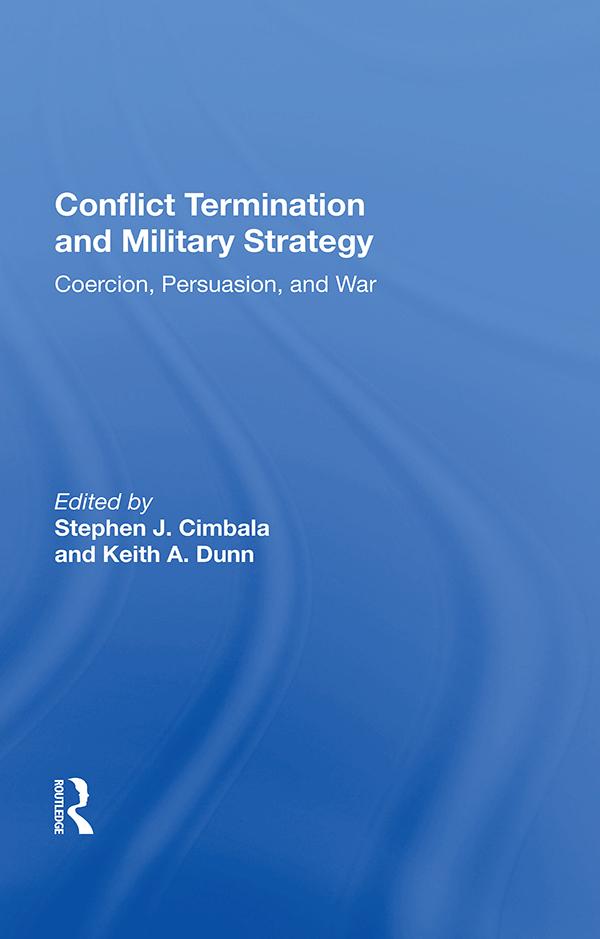
Although considerable attention has been paid to deterrence theory and crisis management, the equally important topic of ending wars has been virtually ignored. Conflict termination is the stepchild of U.S. strategy for a number of reasons. Thinking about how wars should end presupposes acceptance of the fact that war—especially nuclear war— is possible. Further, analyzing options for ending conflicts implies less-than-total victory, a concept that not only runs counter to the U.S. approach to warfare but also raises the specter of “limited war,†an approach that fell into disfavor following Korea and Vietnam. Finally, defining conflict termination objectives assumes that we think more about ends than means, that we know what is important to us and why, and thus understand the risks we will accept to defend specific interests and objectives. The contributors examine a wide variety of topics, ranging from Soviet and U.S. views on conflict termination to past, present, and future U.S. military service contributions. Their aim is to demonstrate the importance of careful evaluation of conflict termination goals during peacetime because when war begins passions and emotions will cloud decisionmaking.
Pages: 208
Category: Statsvetenskap & Politik
e-ISBN: 9780429721786
Shipping weight: 1.2 kg
Ships in: 1-2 days
Pay easily by card, Klarna, Apple Pay or Google Pay. Not happy? You always have a 14-day money-back guarantee. Read more in our terms. If you have any questions, email us at hello@memmo.org.
Memmo makes studying easier – wherever you are in the world. We bring your course books and smart study tools together in one place: summaries, quizzes, podcasts and flashcards. Plus Ted, your study buddy who answers anything you wonder. Over 50,000 students already study here – built to help you learn faster and stress less.
You might also like
Buy the book0