
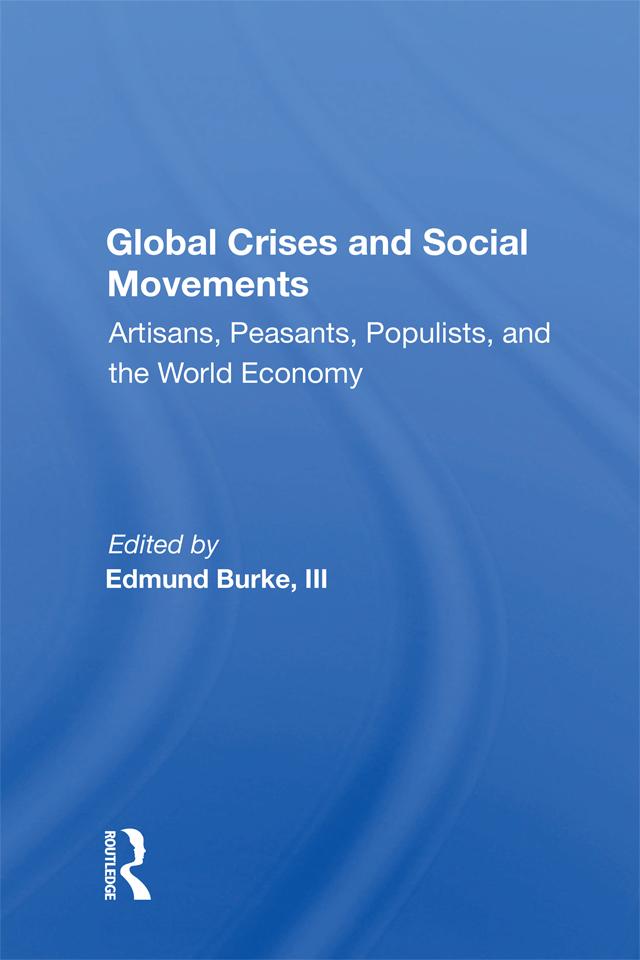
Traditionally, scholars have traced the origins and characteristics of social movements to purely local and national determinants. Until recently, the global dimension of such movements has been relatively neglected. This book takes the innovative step of linking social movements to international political and economic crises, identifying the general features of industrial and developing societies that predispose them toward social movements of particular kinds. The book consists of three parts. views the origins of the European working-class collective movement of 1848 from a variety of perspectives. reexamines the debate on the moral economy of the peasant in terms of "peasant nonrevolt" and global political economy. considers the emergence of fascist and populist movements in Western Europe and East Asia in their intersocietal dimensions. Each of the cases has been selected for its strategic contribution to an understanding of the occurrence of social movements in relation to large-scale societal crises. Collectively, the essays underscore the methodological utility of situating such movements in a global context.
Pages: 288
Category: Statsvetenskap & Politik
e-ISBN: 9780429718458
Shipping weight: 1.2 kg
Ships in: 1-2 days
Pay easily by card, Klarna, Apple Pay or Google Pay. Not happy? You always have a 14-day money-back guarantee. Read more in our terms. If you have any questions, email us at hello@memmo.org.
Memmo makes studying easier – wherever you are in the world. We bring your course books and smart study tools together in one place: summaries, quizzes, podcasts and flashcards. Plus Ted, your study buddy who answers anything you wonder. Over 50,000 students already study here – built to help you learn faster and stress less.
You might also like
Buy the book0