
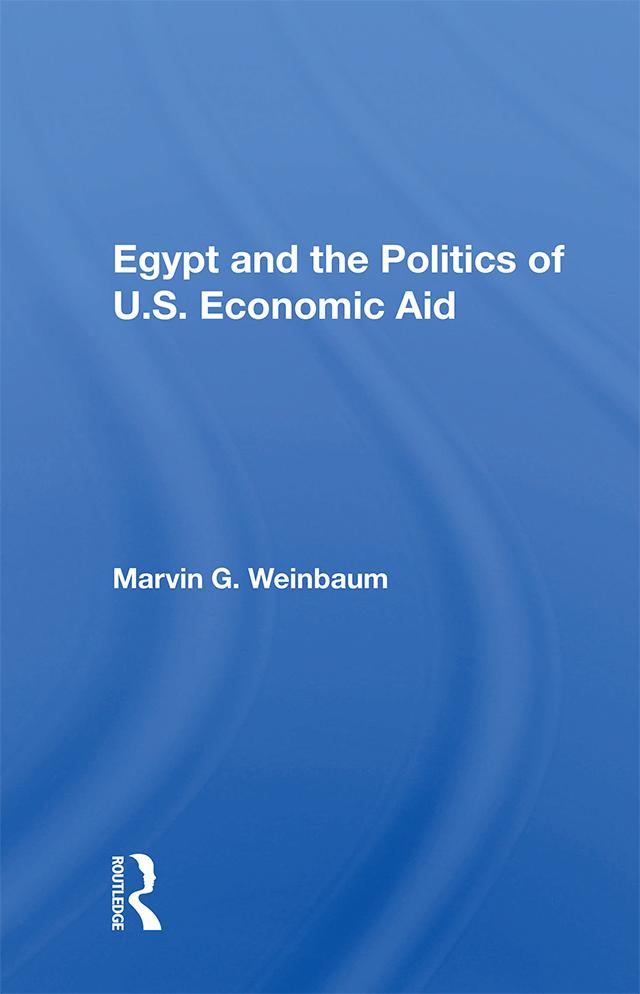
The massive U.S. economic aid program for Egypt initiated in 1975 resulted in a bilateral aid relationship shaped by the interaction of political and development goals. In this study of the program's origins and consequences, Professor Weinbaum describes its scope and identifies the constraints that delayed and limited program implementation. The author discusses the modest U.S. leverage designed to encourage economic reforms and argues that far-reaching reforms could only be attained through a major change in Egypt's political structure. He finds that, despite its failure to make Egypt more economically self-reliant, U.S. assistance has enabled the country to attain a level of consumption and development planning possible with no other alternative. The profit to the United States results from the regime's moderate foreign policies and compatible views on strategic threats to the region. Despite the mutual benefits of this aid program, Professor Weinbaum concludes that the United States must display greater sensitivity to Egypt's political and economic problems if the "special relationship" is to survive through the 1980s.
Pages: 204
Category: Statsvetenskap & Politik
e-ISBN: 9780429711831
Shipping weight: 1.2 kg
Ships in: 1-2 days
Pay easily by card, Klarna, Apple Pay or Google Pay. Not happy? You always have a 14-day money-back guarantee. Read more in our terms. If you have any questions, email us at hello@memmo.org.
Memmo makes studying easier – wherever you are in the world. We bring your course books and smart study tools together in one place: summaries, quizzes, podcasts and flashcards. Plus Ted, your study buddy who answers anything you wonder. Over 50,000 students already study here – built to help you learn faster and stress less.
You might also like
Buy the book0