
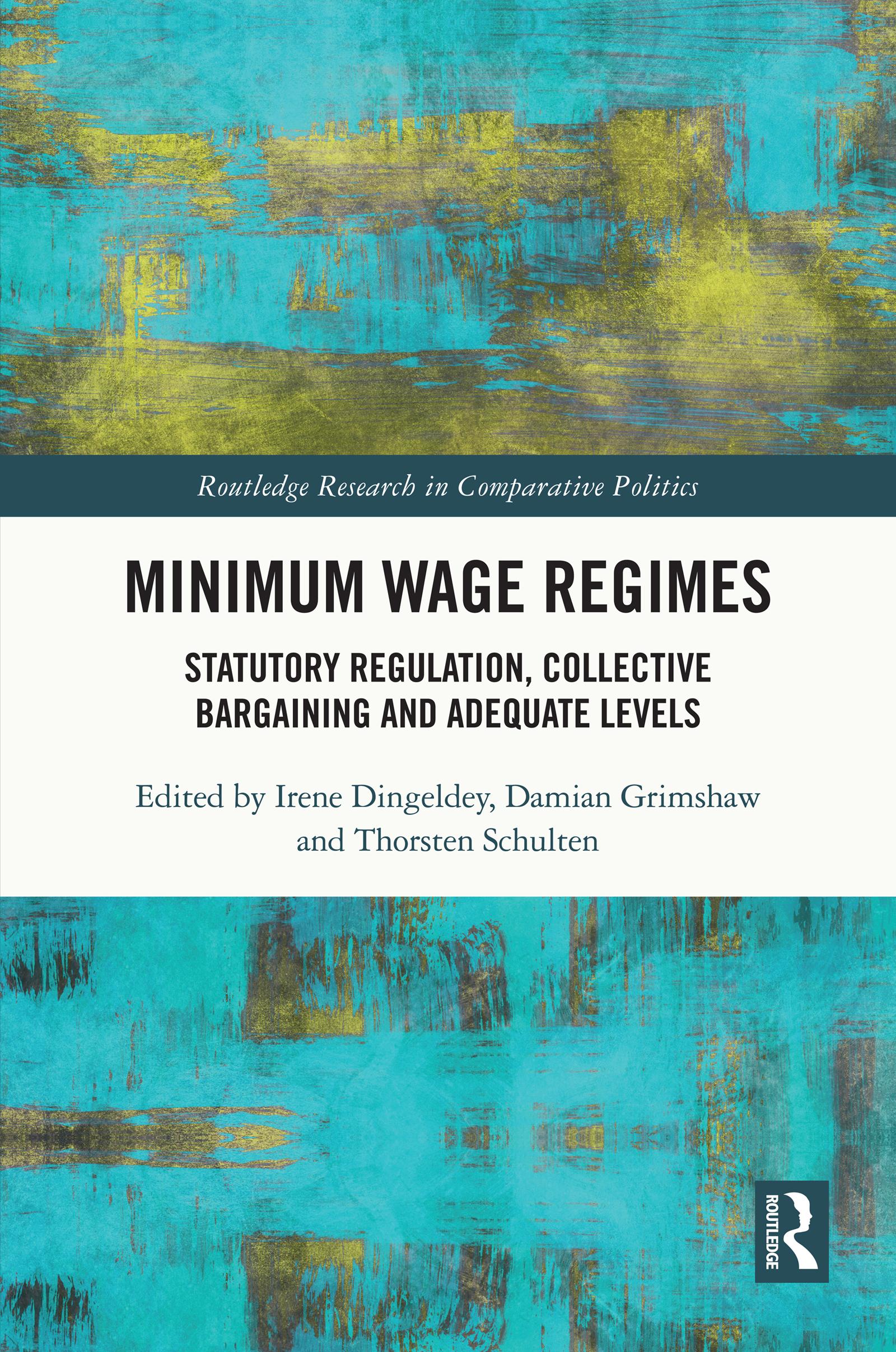
This book goes beyond traditional minimum wage research to investigate the interplay between different country and sectoral institutional settings and actors’ strategies in the field of minimum wage policies.
It asks which strategies and motives, namely free collective bargaining, fair pay and/or minimum income protection, are emphasised by social actors with respect to the regulation and adaptation of (statutory) minimum wages. Taking an actor-centered institutionalist approach, and employing cross-country comparative studies, sector studies and single country accounts of change, the book relates institutional and labour market settings, actors’ strategies and power resources with policy and practice outcomes. Looking at the key pay equity indicators of low wage development and women’s over-representation among the low paid, it illuminates our understandings about the importance of historical junctures, specific constellations of social actors, and sector- and country-specific actor strategies. Finally, it underlines the important role of social dialogue in shaping an effective minimum wage policy.
This book will be of key interest to scholars, students and policy-makers and practitioners in industrial relations, international human resource management, labour studies, labour market policy, inequality studies, trade union studies, European politics and political economy.
Pay easily by card, Klarna, Apple Pay or Google Pay. Not happy? You always have a 14-day money-back guarantee. Read more in our terms. If you have any questions, email us at hello@memmo.org.
Memmo makes studying easier – wherever you are in the world. We bring your course books and smart study tools together in one place: summaries, quizzes, podcasts and flashcards. Plus Ted, your study buddy who answers anything you wonder. Over 50,000 students already study here – built to help you learn faster and stress less.