
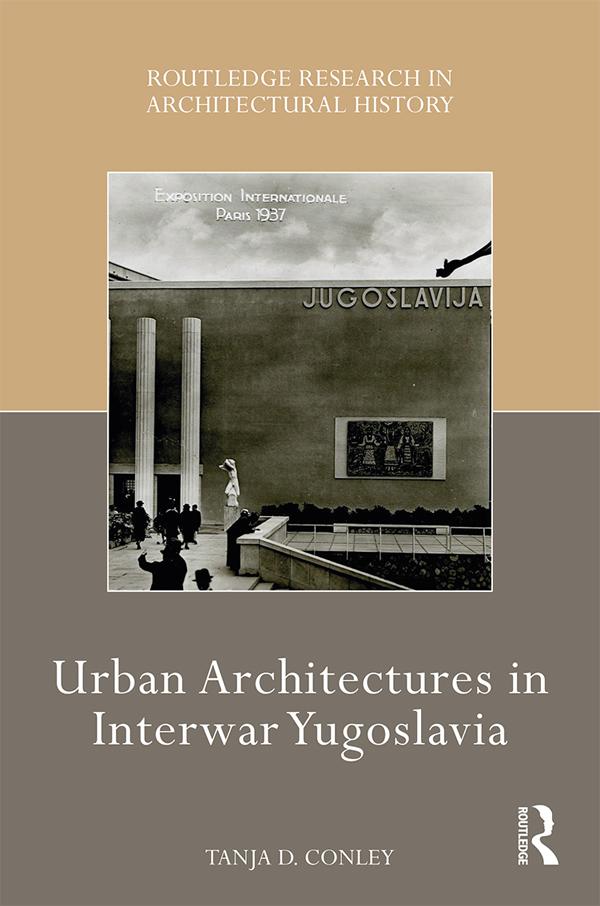
Resulting from a twenty-year period of research, this book seeks to challenge contradictions between the concepts of national and modern architectures promoted among the most pronounced national groups of Yugoslavia: Serbs, Croats and Slovenes. It spans from the beginning of their nation-building programs in the mid-nineteenth century until the collapse of unified South Slavic ideology and the outbreak of the Second World War.
Organized into two parts, it sheds new light onto the question of how two conflicting political agendas – on one side the quest for integral Yugoslavism and, on the other, the fight for strictly separate national identities – were acknowledged through the architecture and urbanism of Belgrade, Zagreb and Ljubljana. Drawing wider conclusions, author Tanja D. Conley investigates boundaries between two opposing yet interrelated tendencies characterizing the architectural professional in the age of modernity: the search for authenticity versus the strive towards globalization.
Urban Architectures in Interwar Yugoslavia will appeal to researchers, academics and students interested in Central and Eastern European architectural history.
Pay easily by card, Klarna, Apple Pay or Google Pay. Not happy? You always have a 14-day money-back guarantee. Read more in our terms. If you have any questions, email us at hello@memmo.org.
Memmo makes studying easier – wherever you are in the world. We bring your course books and smart study tools together in one place: summaries, quizzes, podcasts and flashcards. Plus Ted, your study buddy who answers anything you wonder. Over 75,000 students already study here – built to help you learn faster and stress less.