
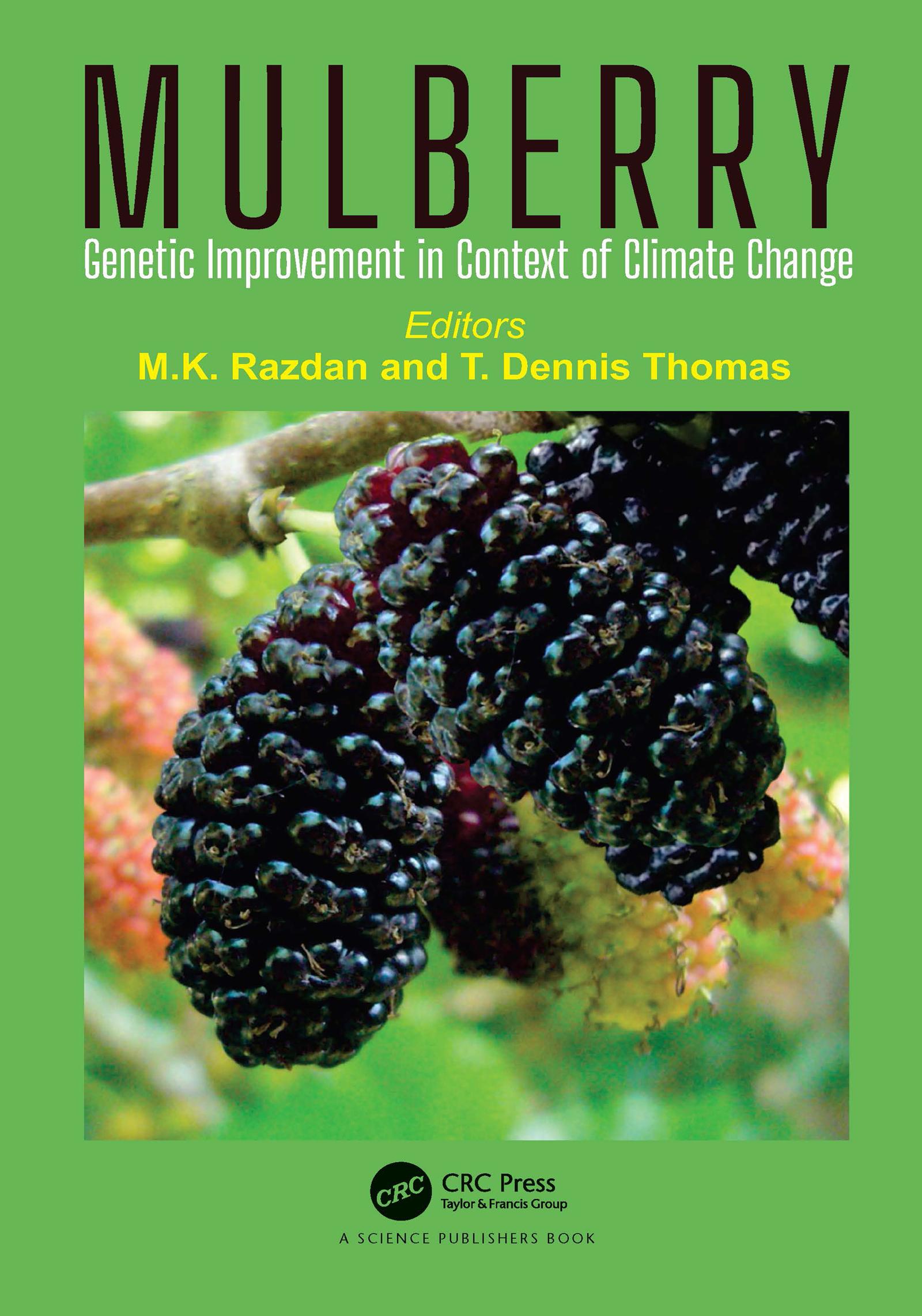
Mulberry (Morus spp.) is an important horticultural plant in the sericulture industry. It belongs to the family Moraceae. The leaf of mulberry is used to feed the silkworm Bombyx mori L. It is also used as a fodder. Due to its economic and agricultural importance, mulberry is cultivated in many parts of the world. An estimated 60% of the total cost of silk cocoon production is for production and maintenance of mulberry plants. Therefore, much attention is needed to improve the quality and quantity of mulberry leaves. It is vital to increase the production of superior quality mulberry leaves with high nutritive value for the sericulture industry.
Although a lot of research is going on in mulberry, very little effort has been made to compile the results of this research in a single book. This book provides an update of recent research works going on in this plant. It describes the taxonomy, conservation of germplasm, genetic diversity of various mulberry species, application of breeding techniques to improve the quality of mulberry, in vitro conservation, application of tissue culture techniques to improve mulberry species, production of haploids and triploids in mulberry and improvement of abiotic stress adaptive traits in mulberry with relevance to adaptiveness to global warming.
Pay easily by card, Klarna, Apple Pay or Google Pay. Not happy? You always have a 14-day money-back guarantee. Read more in our terms. If you have any questions, email us at hello@memmo.org.
Memmo makes studying easier – wherever you are in the world. We bring your course books and smart study tools together in one place: summaries, quizzes, podcasts and flashcards. Plus Ted, your study buddy who answers anything you wonder. Over 50,000 students already study here – built to help you learn faster and stress less.