
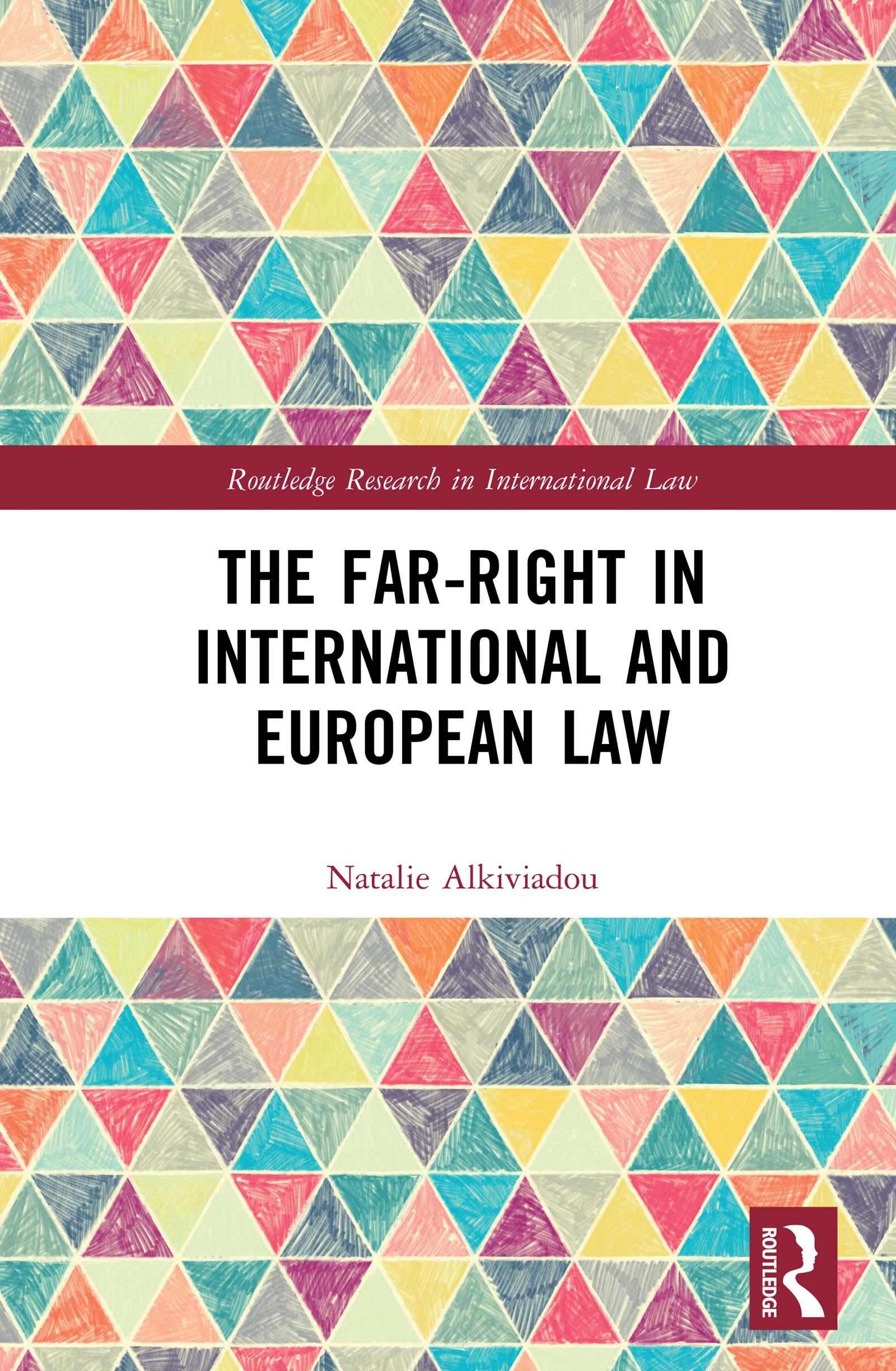
Since the Second World War, the international community has sought to prevent the repetition of destructive far-right forces by establishing institutions such as the United Nations and by adopting documents such as the Universal Declaration of Human Rights. Jurisprudence and conventions directly prohibit far-right speech and expression. Nevertheless, recently, violent far-right entities, such as Golden Dawn of Greece, have received unprecedented electoral support, xenophobic parties have done spectacularly well in elections; and countries such as Hungary and Poland are being led by right-wing populists who are bringing constitutional upheaval and violating basic elements of doctrines such as the rule of law.
In light of this current reality, this book critically assesses the international and European tools available for States to regulate the far-right. It conducts the analysis through a militant democracy lens. This doctrine has been considered in several arenas as a concept more generally; in the sphere of the European Convention on Human Rights; in relation to particular freedoms, such as that of association; and as a tool for challenging the far-right movement through the spectrum of political science. However, this doctrine has not yet been applied within a legal assessment of challenging the far-right as a single entity. After analysing the aims, objectives, scope and possibility of shortcomings in international and European law, the book looks at what state obligations arise from these laws. It then assesses how freedom of opinion and expression, freedom of association and freedom of assembly are provided for in international and European law and explores what limitation grounds exist which are directly relevant to the regulation of the far-right.
The issue of the far-right is a pressing one on the agenda of politicians, academics, civil society and other groups in Europe and beyond. As such, this book will appeal to those with an interest in International, European or Human rights Law and political science.
Pay easily by card, Klarna, Apple Pay or Google Pay. Not happy? You always have a 14-day money-back guarantee. Read more in our terms. If you have any questions, email us at hello@memmo.org.
Memmo makes studying easier – wherever you are in the world. We bring your course books and smart study tools together in one place: summaries, quizzes, podcasts and flashcards. Plus Ted, your study buddy who answers anything you wonder. Over 50,000 students already study here – built to help you learn faster and stress less.