
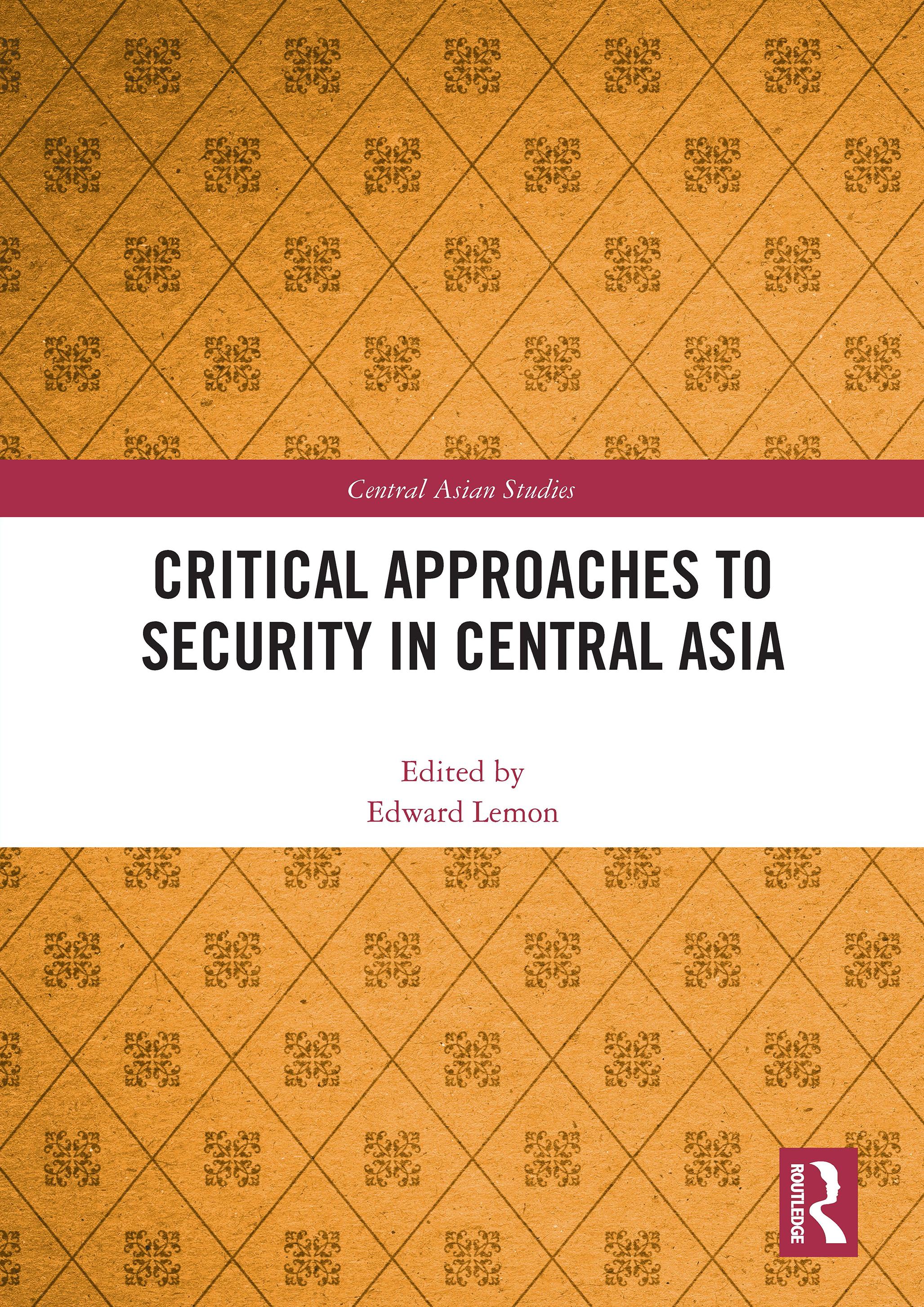
Central Asia remains on the periphery, both spatially and in people’s imaginations. When the region does attract international attention, it is often related to security issues, including terrorism, ethnic conflict and drug trafficking. This book brings together leading specialists from a range of disciplines including geography, anthropology, sociology and political science to discuss how citizens and governments within Central Asia think about and practise security.
The authors explore how governments use fears of instability to bolster their rule, and how securitized populations cope with (and resist) being labelled threats through strategies that are rarely associated with security, including marriage and changing their appearance. This collection examines a wide range of security issues including Islamic extremism, small arms, interethnic relations and border regions. While coverage of the region often departs from preconceived notions of the region as dangerous, obscure and volatile, the chapters in this book all place emphasis on the way local people understand security and harmony in their daily lives.
This book will be of interest to students and researchers of Central Asian Studies as well as Security Studies and Political Science. The chapters were originally published in the journal Central Asian Survey.
Pay easily by card, Klarna, Apple Pay or Google Pay. Not happy? You always have a 14-day money-back guarantee. Read more in our terms. If you have any questions, email us at hello@memmo.org.
Memmo makes studying easier – wherever you are in the world. We bring your course books and smart study tools together in one place: summaries, quizzes, podcasts and flashcards. Plus Ted, your study buddy who answers anything you wonder. Over 50,000 students already study here – built to help you learn faster and stress less.