
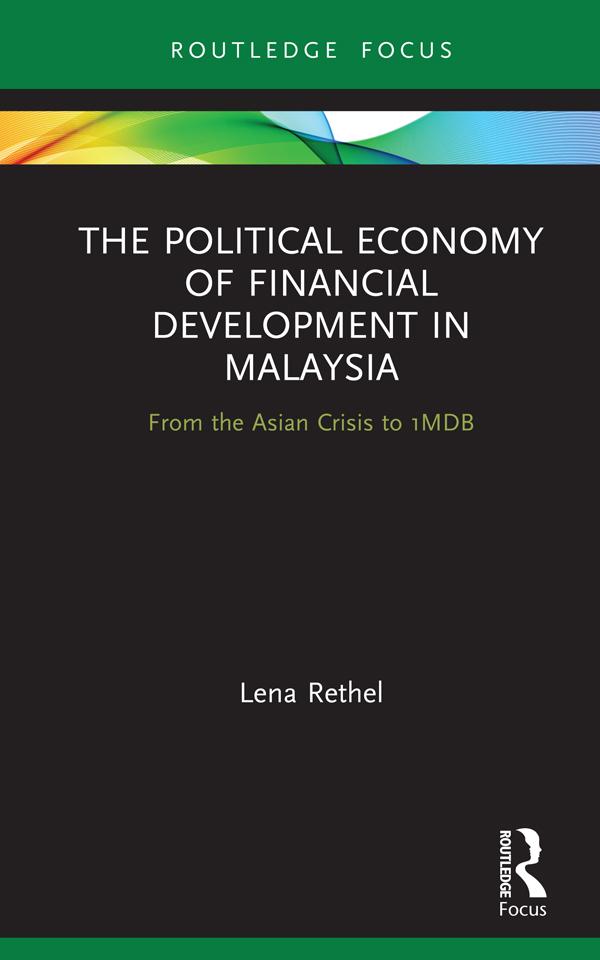
Current inquiries into the political economy of financial policymaking in Malaysia tend to focus on the high-level drama of crisis politics or simply point to the limited impact of post-crisis financial reforms, given that politico-business relations have remained close. In so doing, pundits ignore a number of intriguing questions: what is the relationship between financial development and financialisation and how has it played out in the Malaysian context? And more generally: how can a country like Malaysia become significantly more financially developed, yet fail to emancipate the financial system from political control; a core element of the financial development discourse?
To unravel the complexities of this puzzle, this book subjects the history and contemporary practices of financial policymaking in Malaysia to scrutiny. It argues that to understand financial development in Malaysia, its progress and reversals, it is important to conceptualise it as a political, rather than a merely technical process. In so doing, the book echoes a more profound concern in the political economy literature, namely the evolving relationship between states and markets, and the supposed retreat or reassertion of the state at a time of increasing (financial) globalisation. The book can generate further insights into the evolving role of the state with regard to broader processes of development and marketisation, as they relate specifically to finance.
Pay easily by card, Klarna, Apple Pay or Google Pay. Not happy? You always have a 14-day money-back guarantee. Read more in our terms. If you have any questions, email us at hello@memmo.org.
Memmo makes studying easier – wherever you are in the world. We bring your course books and smart study tools together in one place: summaries, quizzes, podcasts and flashcards. Plus Ted, your study buddy who answers anything you wonder. Over 50,000 students already study here – built to help you learn faster and stress less.