
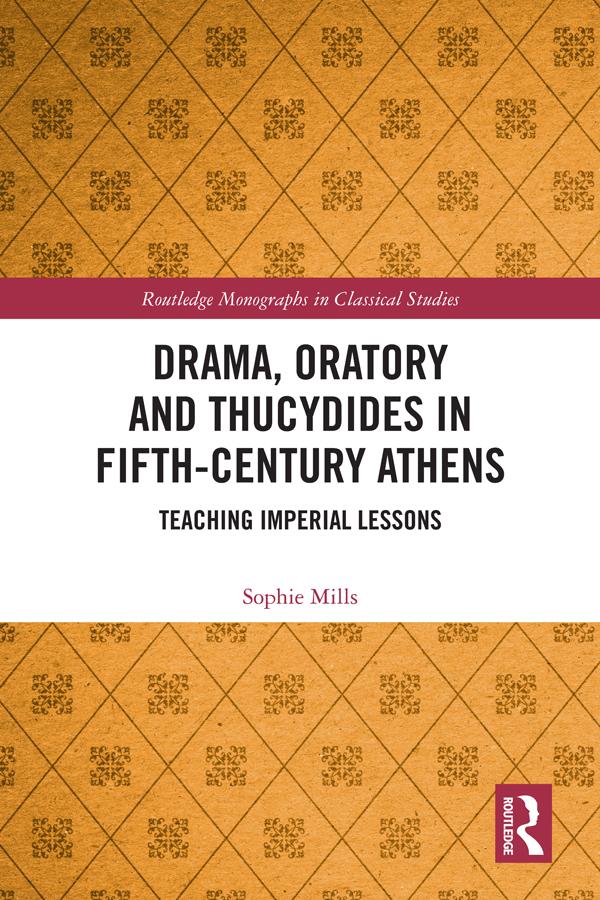
This study centres on the rhetoric of the Athenian empire, Thucydides’ account of the Peloponnesian War and the notable discrepancies between his assessment of Athens and that found in tragedy, funeral orations and public art.
Mills explores the contradiction between Athenian actions and their self-representation, arguing that Thucydides’ highly critical, cynical approach to the Athenian empire does not reflect how the average Athenian saw his city’s power. The popular education of the Athenians, as presented to them in funeral speeches, drama and public art told a very different story from that presented by Thucydides’ history, and it was far more palatable to ordinary Athenians since it offered them a highly flattering portrayal of their city and, by extension, each individual who made up that city.
Drama, Oratory and Thucydides in Fifth-Century Athens: Teaching Imperial Lessons offers a fascinating insight into Athenian self-representation and will be of interest to anyone working on classical Athens, the Greek polis and classical historiography.
Pay easily by card, Klarna, Apple Pay or Google Pay. Not happy? You always have a 14-day money-back guarantee. Read more in our terms. If you have any questions, email us at hello@memmo.org.
Memmo makes studying easier – wherever you are in the world. We bring your course books and smart study tools together in one place: summaries, quizzes, podcasts and flashcards. Plus Ted, your study buddy who answers anything you wonder. Over 75,000 students already study here – built to help you learn faster and stress less.