
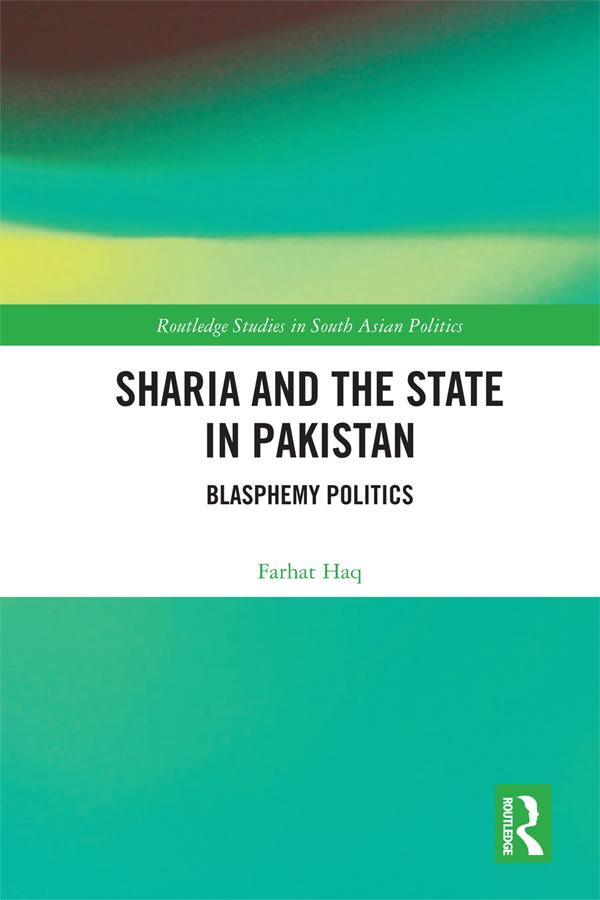
This book analyses the formulation, interpretation and implementation of sharia in Pakistan and its relationship with the Pakistani state whilst addressing the complexity of sharia as a codified set of laws.
Drawing on insights from Islamic studies, anthropology and legal studies to examine the interactions between ideas, institutions and political actors that have enabled blasphemy laws to become the site of continuous controversy, this book furthers the readers’ understanding of Pakistani politics and presents the transformation of sharia from a pluralistic religious precepts to a set of rigid laws. Using new materials, including government documents and Urdu language newspapers, the author contextualises the larger political debate within Pakistan and utilises a comparative and historical framework to weave descriptions of various events with discussions on sharia and blasphemy.
A contribution to the growing body of literature, which explores the role of state in shaping the religion and religious politics in Muslim-majority countries, this book will be of interest to academics working on South Asian Politics, Political Islam, Sharia Law, and the relationship of Religion and the State.
Pay easily by card, Klarna, Apple Pay or Google Pay. Not happy? You always have a 14-day money-back guarantee. Read more in our terms. If you have any questions, email us at hello@memmo.org.
Memmo makes studying easier – wherever you are in the world. We bring your course books and smart study tools together in one place: summaries, quizzes, podcasts and flashcards. Plus Ted, your study buddy who answers anything you wonder. Over 50,000 students already study here – built to help you learn faster and stress less.