
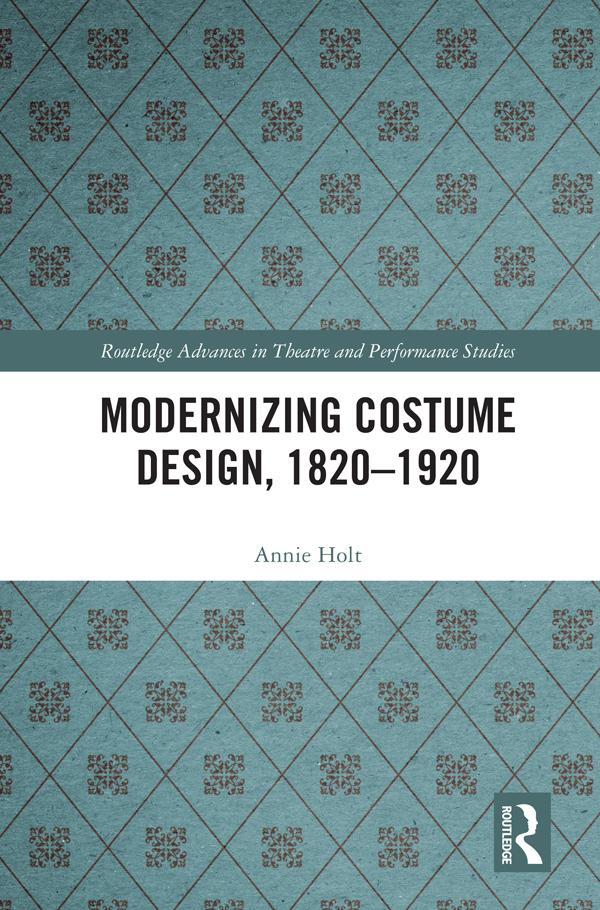
Annie Holt identifies the roots of contemporary Euro-American practices of costume design, in which costumes are an integrated part of the dramaturgy rather than a reflection of an individual performer’s taste or status. She argues that in the period 1820–1920, as part of the larger project of modernism across the artistic and cultural field, the functions of "clothing" and "costume" diverged. Onstage apparel took on a more specific semiotic task, acting as a fresh channel for the flow of information between the performer, the literary text, and the spectator.
Modernizing Costume Design traces how five kinds of artists – directors, performers, writers, couturiers, and painters – made key contributions to this new model of costume design. Holt shows that by 1920, costume design shifted in status from craft to art.
Pay easily by card, Klarna, Apple Pay or Google Pay. Not happy? You always have a 14-day money-back guarantee. Read more in our terms. If you have any questions, email us at hello@memmo.org.
Memmo makes studying easier – wherever you are in the world. We bring your course books and smart study tools together in one place: summaries, quizzes, podcasts and flashcards. Plus Ted, your study buddy who answers anything you wonder. Over 75,000 students already study here – built to help you learn faster and stress less.