
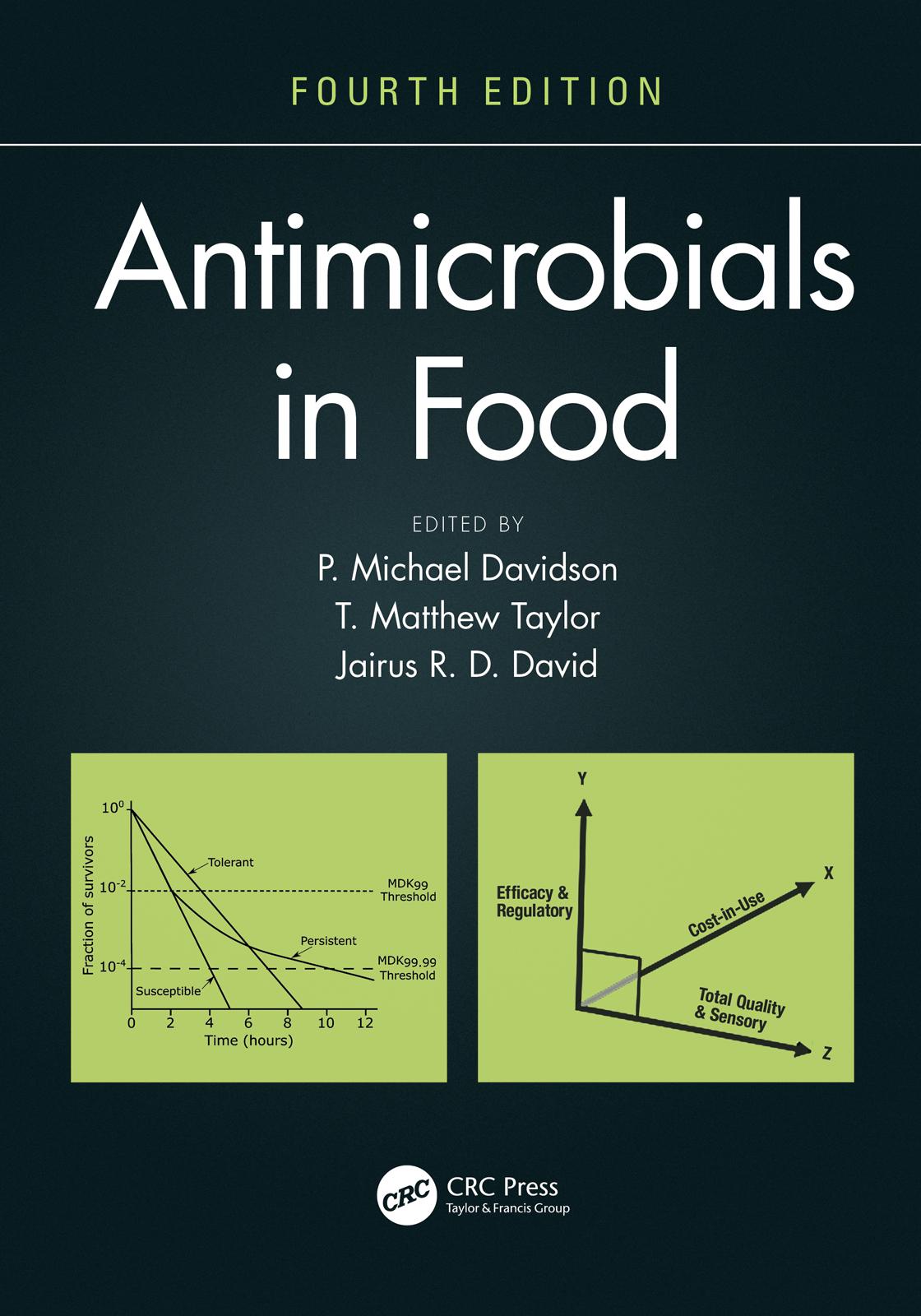
Fifteen years have passed since the 3rd edition of Antimicrobials in Food was published. It was arguably considered the "must-have" reference for those needing information on chemical antimicrobials used in foods. In the years since the last edition, the food industry has undergone radical transformations because of changes on several fronts. Reported consumer demands for the use of "natural" and "clean-label" antimicrobials have increased significantly. The discovery of new foodborne pathogen niches and potentially hazardous foods, along with a critical need to reduce food spoilage waste, has increased the need for suitable antimicrobial compounds or systems. Novel natural antimicrobials continue to be discovered, and new research has been carried out on traditional compounds. These and other related issues led the editors to develop the 4th edition of Antimicrobials in Food.
In the 4th edition, the editors have compiled contemporary topics with information synthesized from internationally recognized authorities in their fields. In addition to updated information, new chapters have been added in this latest release with content on the use of bacteriophages, lauric arginate ester, and various systems for antimicrobial encapsulation and delivery. Comprehensive revisions of landmark chapters in previous editions including naturally occurring antimicrobials from both animal and plant sources, methods for determining antimicrobial activity, new approaches to multifactorial food preservation or "hurdle technology," and mechanisms of action, resistance, and stress adaptation are included. Complementing these topics is new information on quantifying the capability of "clean" antimicrobials for food preservation when compared to traditional food preservatives and industry considerations when antimicrobials are evaluated for use in food manufacture.
Features
- Covers all food antimicrobials, natural and synthetic, with the latest research on each type
- Contains 5,000+ references on every conceivable food antimicrobial
- Guides in the selection of appropriate additives for specific food products
- Includes innovations in antimicrobial delivery technologies and the use of multifactorial food preservation with antimicrobials
Pay easily by card, Klarna, Apple Pay or Google Pay. Not happy? You always have a 14-day money-back guarantee. Read more in our terms. If you have any questions, email us at hello@memmo.org.
Memmo makes studying easier – wherever you are in the world. We bring your course books and smart study tools together in one place: summaries, quizzes, podcasts and flashcards. Plus Ted, your study buddy who answers anything you wonder. Over 50,000 students already study here – built to help you learn faster and stress less.