
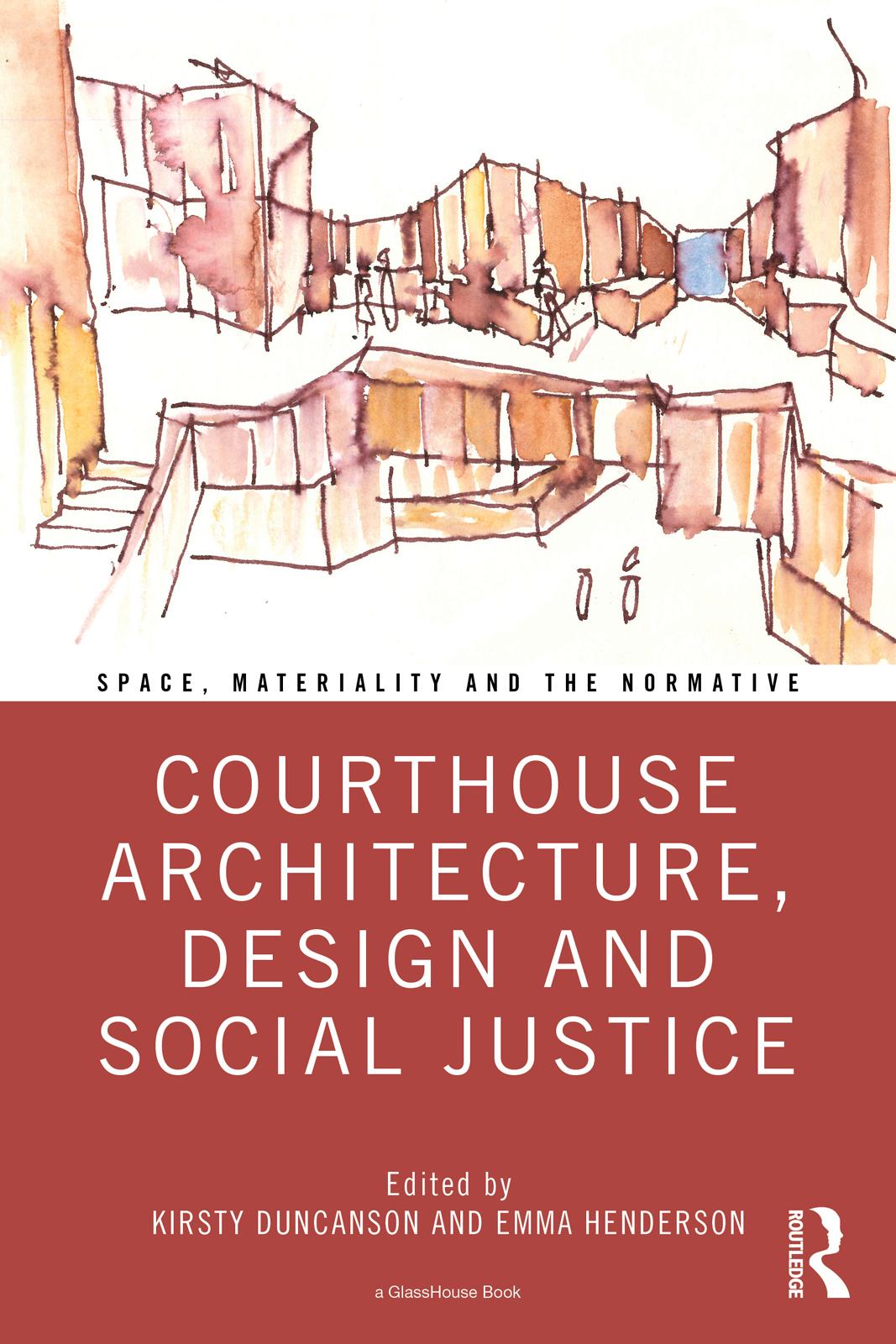
This collection interrogates relationships between court architecture and social justice, from consultation and design to the impact of material (and immaterial) forms on court users, through the lenses of architecture, law, socio-legal studies, criminology, anthropology, and a former senior federal judge.
International multidisciplinary collaborations and single-author contributions traverse a range of methodological approaches to present new insights into the relationship between architecture, design, and justice. These include praxis, photography, reflections on process and decolonising practice, postcolonial, feminist, and poststructural analysis, and theory from critical legal scholarship, political science, criminology, literature, sociology, and architecture. While the opening contributions reflect on establishing design principles and architectural methodologies for ethical consultation and collaboration with communities historically marginalised and exploited by law, the central chapters explore the textures and affects of built forms and the spaces between; examining the disjuncture between design intention and use; and investigating the impact of architecture and the design of space. The collection finishes with contemplations of the very real significance of material presence or absence in courtroom spaces and what this might mean for justice.
Courthouse Architecture, Design and Social Justice provides tools for those engaged in creating, and reflecting on, ethical design and building use, and deepens the dialogue across disciplinary boundaries towards further collaborative work in the field. It also exists as a new resource for research and teaching, facilitating undergraduate critical thought about the ways in which design enhances and restricts access to justice.
Pay easily by card, Klarna, Apple Pay or Google Pay. Not happy? You always have a 14-day money-back guarantee. Read more in our terms. If you have any questions, email us at hello@memmo.org.
Memmo makes studying easier – wherever you are in the world. We bring your course books and smart study tools together in one place: summaries, quizzes, podcasts and flashcards. Plus Ted, your study buddy who answers anything you wonder. Over 75,000 students already study here – built to help you learn faster and stress less.