
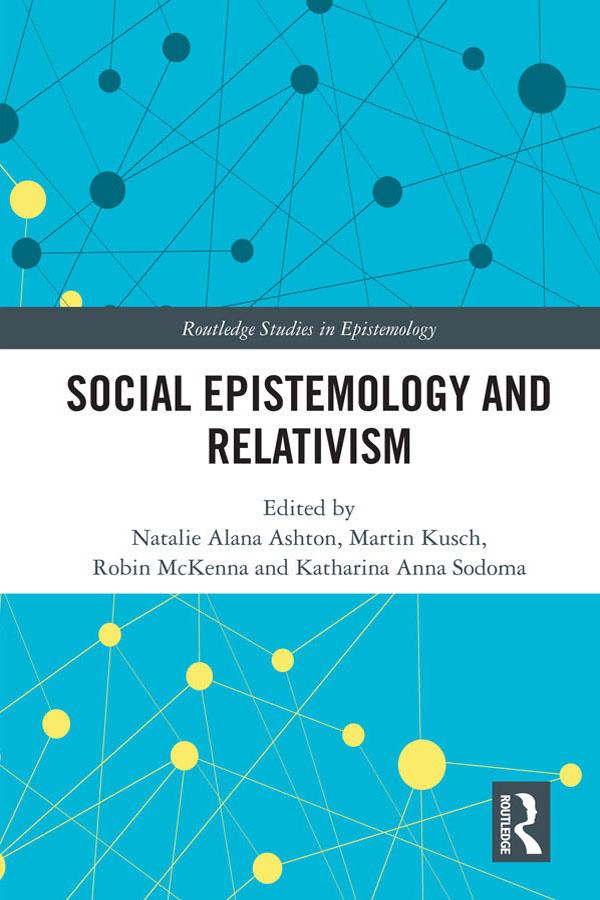
This is the first book to explore the connections and interactions between social epistemology and epistemic relativism. The essays in the volume are organized around three distinct philosophical approaches to this topic: 1) foundational questions concerning deep disagreement, the variability of epistemic norms, and the relationship between relativism and reliabilism; 2) the role of relativistic themes in feminist social epistemology; and 3) the relationship between the sociology of knowledge, philosophy of science, and social epistemology.
Recent trends in social epistemology seek to rectify earlier work that conceptualized cognitive achievements primarily on the level of isolated individuals. Relativism insists that epistemic judgements or beliefs are justified or unjustified only relative to systems of standards—there is not neutral way of adjudicating between them. By bringing together these two strands of epistemology, this volume offers unique perspectives on a number of central epistemological questions.
Social Epistemology and Relativism will be of interest to researchers working in epistemology, feminist philosophy, and the sociology of knowledge.
Pay easily by card, Klarna, Apple Pay or Google Pay. Not happy? You always have a 14-day money-back guarantee. Read more in our terms. If you have any questions, email us at hello@memmo.org.
Memmo makes studying easier – wherever you are in the world. We bring your course books and smart study tools together in one place: summaries, quizzes, podcasts and flashcards. Plus Ted, your study buddy who answers anything you wonder. Over 50,000 students already study here – built to help you learn faster and stress less.