
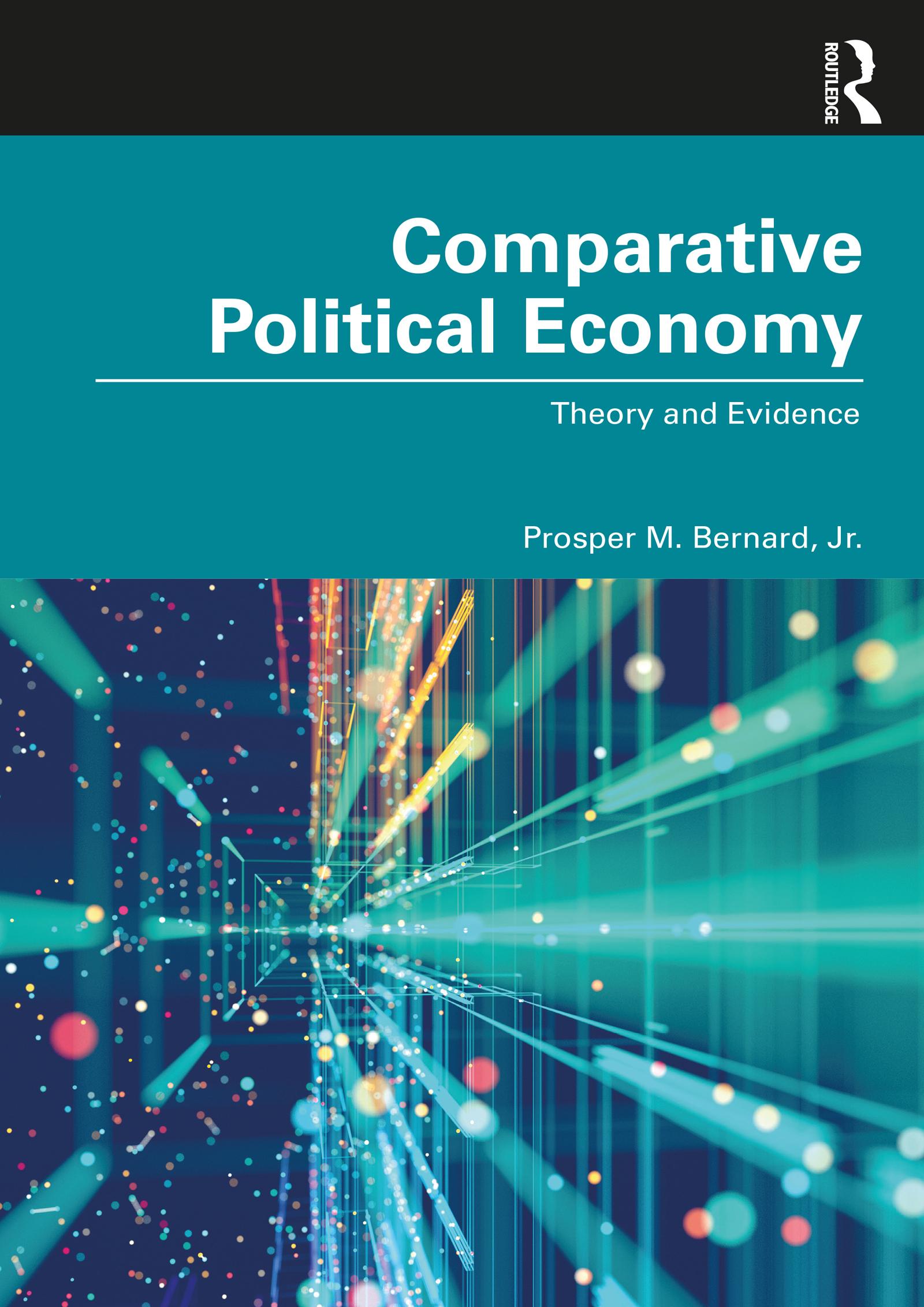
Why do unemployment, inflation, and growth rates vary across political economies? Why are some capitalist societies more equitable than others? Why is public spending higher in some countries than others? Drawing on insights from political science, economics, and business, this book addresses these and other related questions in the context of advanced capitalist democracies.
The first part of the book investigates how macroeconomic performance and policy outcomes such as public spending, tax revenue, and trade openness are shaped by various economic and political institutions as well as democratic politics. The second part probes the effects of economic performance and social changes on domestic politics. At the end of each chapter, key terms, review questions, and a short list of recommended readings are included.
Each chapter is designed to familiarize readers with core concepts, theoretical arguments, and empirical evidence related to different substantive themes. With in-text focus boxes and short case studies, this book is ideal for anyone seeking a rigorous introduction to the comparative political economy of advanced political economies, and will be a valuable text on courses in political economy, comparative economics, and related areas.
Pay easily by card, Klarna, Apple Pay or Google Pay. Not happy? You always have a 14-day money-back guarantee. Read more in our terms. If you have any questions, email us at hello@memmo.org.
Memmo makes studying easier – wherever you are in the world. We bring your course books and smart study tools together in one place: summaries, quizzes, podcasts and flashcards. Plus Ted, your study buddy who answers anything you wonder. Over 50,000 students already study here – built to help you learn faster and stress less.