
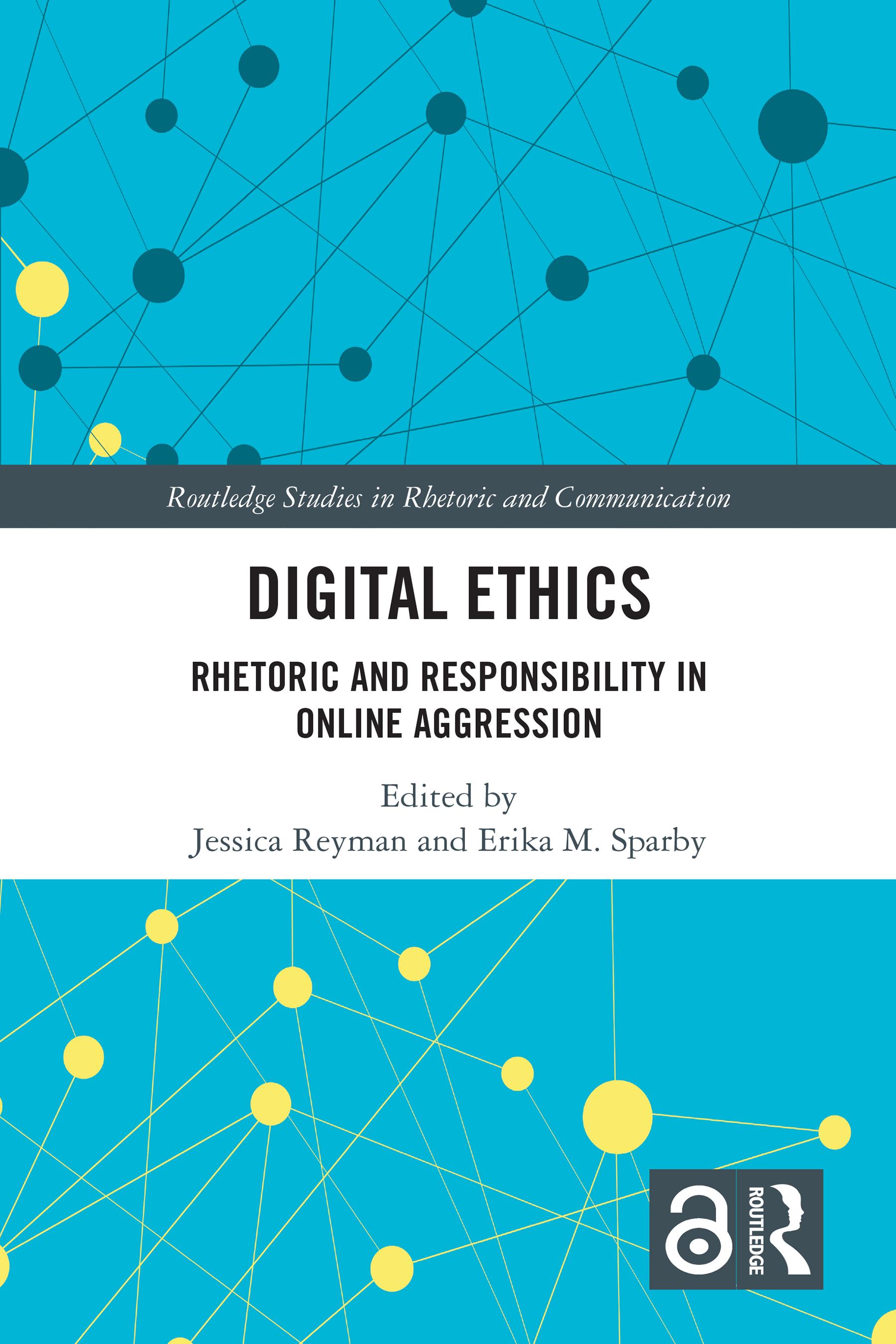
Digital Ethics delves into the shifting legal and ethical landscape in digital spaces and explores productive approaches for theorizing, understanding, and navigating through difficult ethical issues online.
Contributions from leading scholars address how changing technologies and media over the last decade have both created new ethical quandaries and reinforced old ones in rhetoric and writing studies. Through discussions of rhetorical theory, case studies and examples, research methods and methodologies, and pedagogical approaches and practical applications, this collection will further digital rhetoric scholars’ inquiry into digital ethics and writing instructors’ approaches to teaching ethics in the current technological moment.
A key contribution to the literature on ethical practices in digital spaces, this book will be of interest to researchers and teachers in the fields of digital rhetoric, composition, and writing studies.
Chapter 9 of this book is freely available as a downloadable Open Access PDF at http://www.taylorfrancis.com under a Creative Commons Attribution-Non Commercial-No Derivatives (CC-BY-NC-ND) 4.0 license.
Pay easily by card, Klarna, Apple Pay or Google Pay. Not happy? You always have a 14-day money-back guarantee. Read more in our terms. If you have any questions, email us at hello@memmo.org.
Memmo makes studying easier – wherever you are in the world. We bring your course books and smart study tools together in one place: summaries, quizzes, podcasts and flashcards. Plus Ted, your study buddy who answers anything you wonder. Over 50,000 students already study here – built to help you learn faster and stress less.