
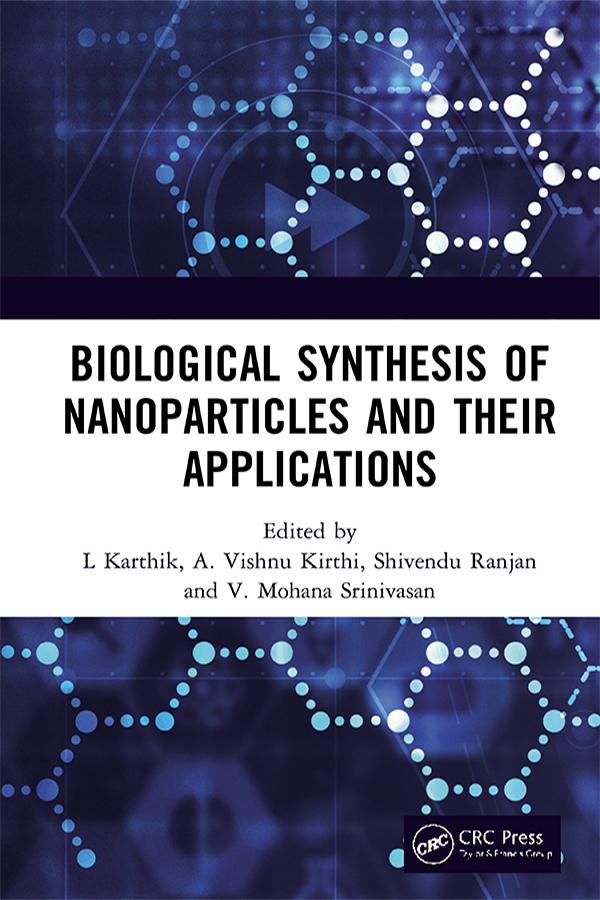
Biological Synthesis of Nanoparticles and Their Applications gives insight into the synthesis of nanoparticles utilizing the natural routes. It demonstrates various strategies for the synthesis of nanoparticles utilizing plants, microscopic organisms like bacteria, fungi, algae and so forth. It orchestrates interdisciplinary hypothesis, ideas, definitions, models and discoveries associated with complex cell of the prokaryotes and eukaryotes.
Highlights:
- Discusses biological approach towards the nanoparticle synthesis
- Describes the role of nanotechnology in the field of medicine and its medical devices
- Covers application and usage of the chemicals at the molecular level to act as catalysts and binding products for both organic and inorganic Chemical Reactions
- Reviews application in physics such as solar cells, photovoltaics and other usage
Microorganisms can aggregate and detoxify substantial metals because of different reductase enzymes, which can diminish metal salts to metal nanoparticles. The readers after going through this book will have detailed account of mechanism of bio-synthesis of nanoparticles.
Pay easily by card, Klarna, Apple Pay or Google Pay. Not happy? You always have a 14-day money-back guarantee. Read more in our terms. If you have any questions, email us at hello@memmo.org.
Memmo makes studying easier – wherever you are in the world. We bring your course books and smart study tools together in one place: summaries, quizzes, podcasts and flashcards. Plus Ted, your study buddy who answers anything you wonder. Over 50,000 students already study here – built to help you learn faster and stress less.