
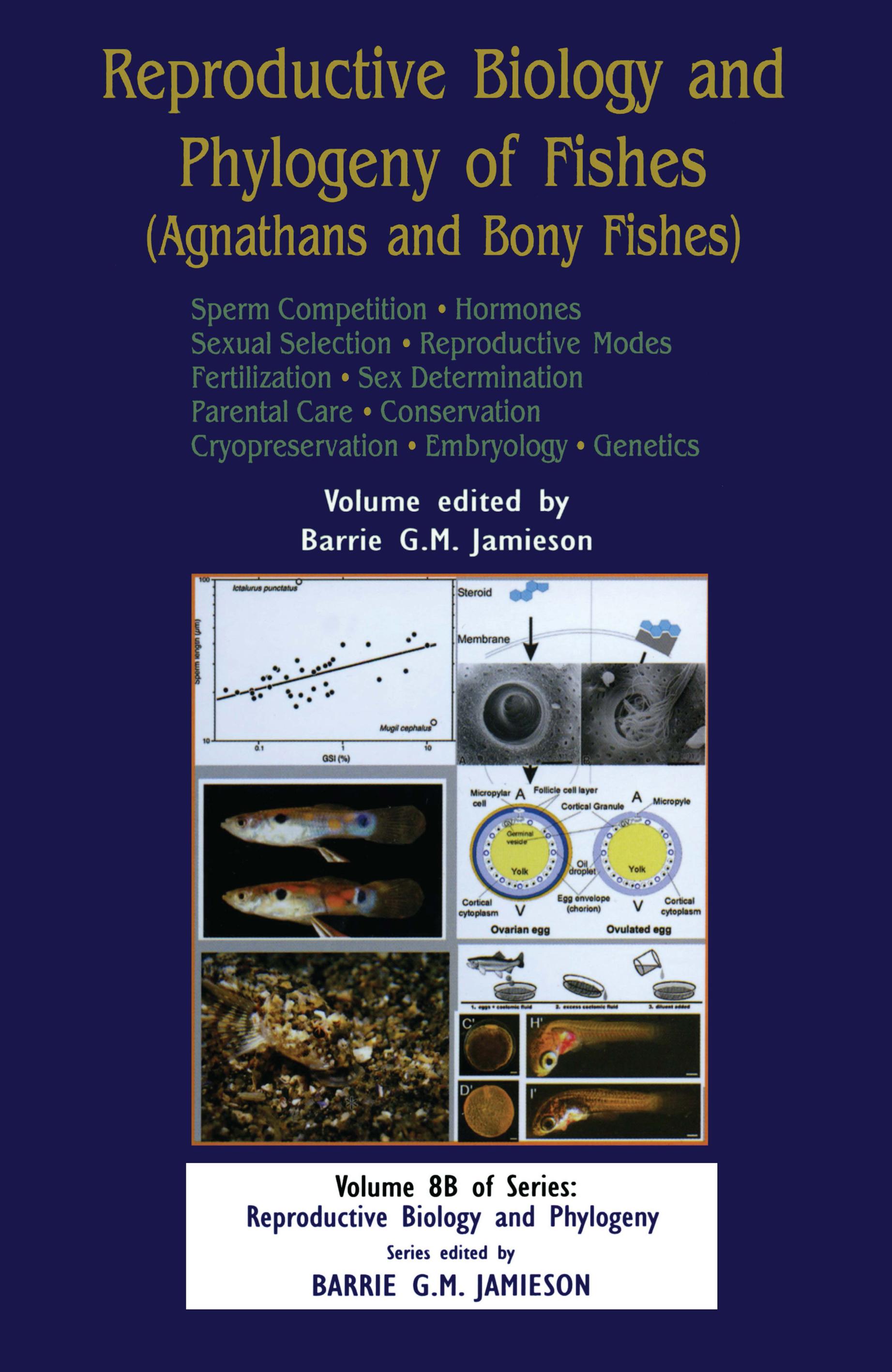
The animals loosely termed fish constitute more than half of all known vertebrate species. There are approximately 27,000 described living species of bony fishes (Euteleostomi = Osteichthyes), about 70 species of hagfishes and some 34 species of lampreys. Approximately 970 species are chondrichthyans, the sharks and their relatives, which were the subject of volume 3 in this series. It is perhaps because fishes live in a buoyant medium, whether it be fresh or sea water, that they show a diversity in body shapes that is unparalleled by other vertebrates. There is also a unique diversity in the modes of reproduction, whether by external or internal fertilization, and this, with the morphology and fine structure of the reproductive system and its components, is the subject of Part A. Part B deals with complementary topics: testes, sperm, and sperm competition; endocrinology of reproduction; pheromones and reproduction; copulatory structures: taxonomic overview and the potential for sexual selection; sexual selection: signaling and courtship; adaptation and evolution of reproductive mode in copulating cottoid species; fertilization; sex determination; parental care; reproduction in relation to conservation and exploitation of marine fishes; Cryopreservation of Gametes; Embryogenesis and Development; and Molecular Genetics of Development.
Pay easily by card, Klarna, Apple Pay or Google Pay. Not happy? You always have a 14-day money-back guarantee. Read more in our terms. If you have any questions, email us at hello@memmo.org.
Memmo makes studying easier – wherever you are in the world. We bring your course books and smart study tools together in one place: summaries, quizzes, podcasts and flashcards. Plus Ted, your study buddy who answers anything you wonder. Over 50,000 students already study here – built to help you learn faster and stress less.
You might also like
Buy the book0