
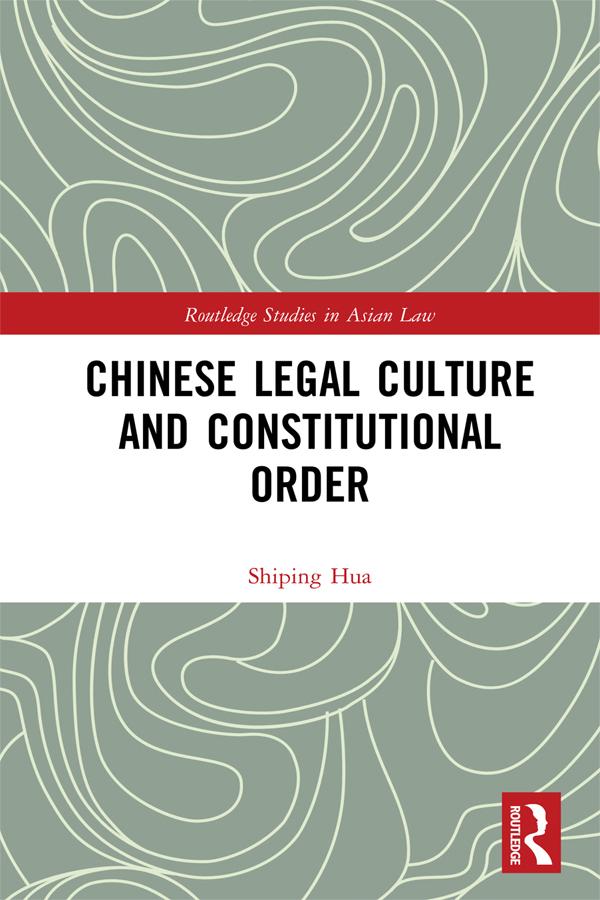
This book examines China’s striving for a constitutional order in the 20th century from comparative, historical, and theoretical perspectives.
Through a comprehensive study of six major constitutional reforms experienced by China in the last century, Shiping Hua explores pragmatism, instrumentalism, statism, and favoritism as the key features of the Chinese legal culture. Demonstrating that these characteristics have roots in China’s ancient past and coincide with modern communist legal theory, it argues that Chinese legal culture has greatly impacted upon the country’s move to modernize its legal system. By analyzing key constitutional periods in China’s history, this book also evaluates patterns that can be used to better comprehend not only China’s present legal reform but its future legal developments too.
As the first book to examine how the Chinese legal culture has affected constitutional reform in the 20th century, Chinese Legal Culture and Constitutional Order will be useful to students and scholars of Asian and constitutional law, as well as Chinese Studies more generally.
Winner of the 2019 ACPSS (Association of Chinese Professors of Social Sciences in the United States) Best Scholarly Publication Award for Original Research.
Pay easily by card, Klarna, Apple Pay or Google Pay. Not happy? You always have a 14-day money-back guarantee. Read more in our terms. If you have any questions, email us at hello@memmo.org.
Memmo makes studying easier – wherever you are in the world. We bring your course books and smart study tools together in one place: summaries, quizzes, podcasts and flashcards. Plus Ted, your study buddy who answers anything you wonder. Over 50,000 students already study here – built to help you learn faster and stress less.